
Centering the Sacred in every day life
Or, alternatively, "A religious identity crisis and wayfinding through the wilderness"

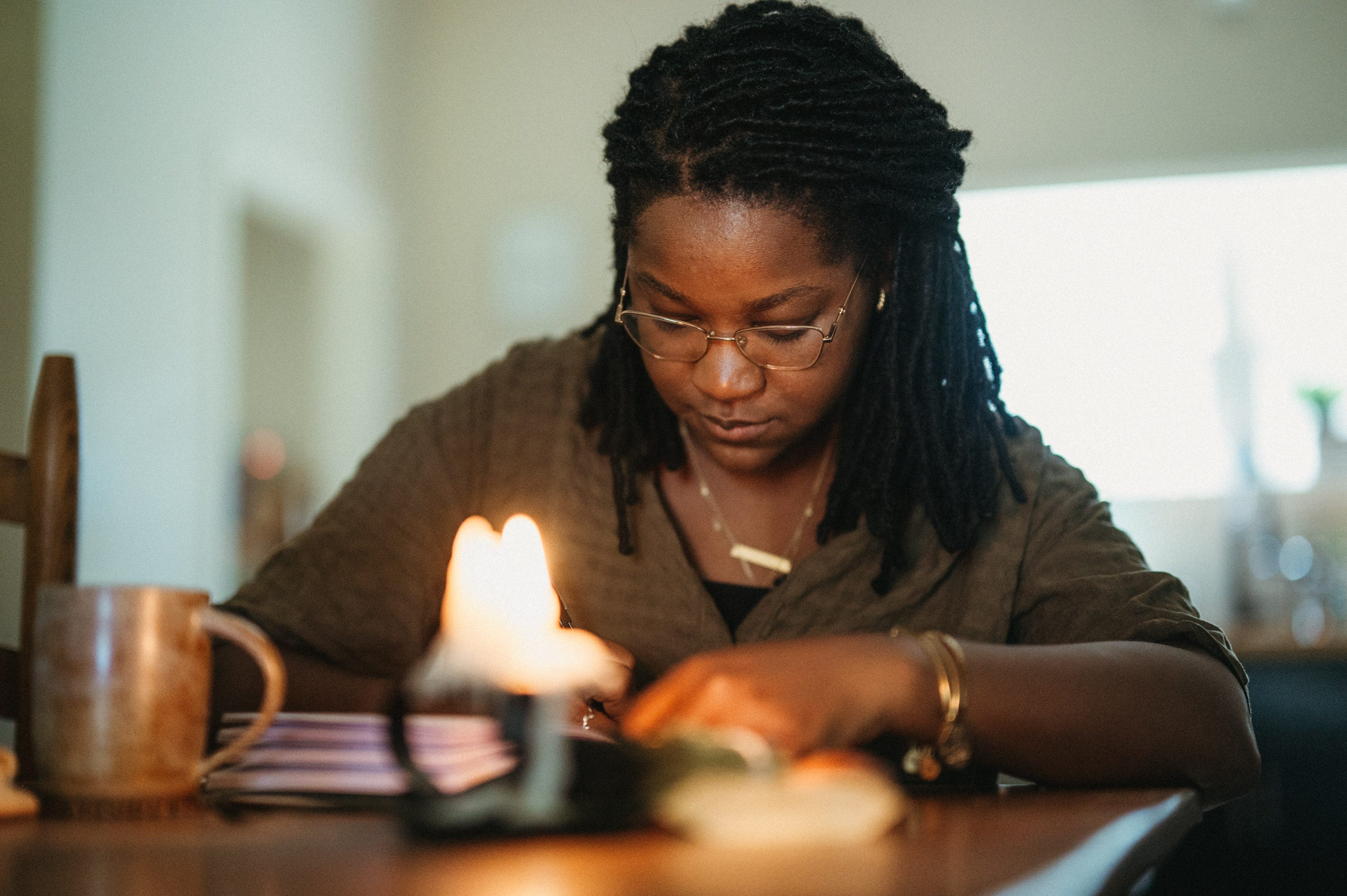
“Center the Sacred in your everyday life.”
This is one of my favorite phrases as of late. The spark of divinity is in every living thing. This phrase reminds me to notice. To pay attention. To listen for the magic and movement of Spirit all around, and to respond.
But lately, this phrase has been haunting me a bit. It’s been pushing me to get more clear. What does it really mean to center the Sacred? And when I extend this invitation to you all via this blog, or to my directees in a spiritual companionship session, what exactly am I inviting people into?
I suppose underneath this haunting is my present struggle with all sorts of questions related to faith, religion, community, and tradition.
A few weeks ago, on a Marco Polo1 thread with two close friends, I said,
“Gosh, I just feel this pressure to answer the question, ‘Am I a Christian?’ On the one hand, of course I am. Following the way of Jesus is in my bones. But on the other hand, if I were to share some of my views with more traditional practitioners of the faith, they would definitely tell me I’m not Christian at all. What do I with that?!”
I’m writing about this because I imagine some of you can relate. You were raised within a tradition with a certain set of beliefs or values, and as you’ve grown and changed, they just don’t fit anymore.
Or maybe out of necessity or curiosity, you’ve folded new practices or language into your spiritual life, and those practices may or may not be considered orthodox or traditional enough.
For those of us who are in-between spiritual homes or religious communities, what does it mean to center the Sacred? What does it mean to watch for the Divine in the various corners of our lives? How do we hold the uncertainty and fear that arises when it’s time to shed old ways of being, thinking, and believing?

In my experience and observation, there are multiple ways folks respond to their own spiritual growth and evolution.
While this list is absolutely not exhaustive, the following responses are top of mind:
Numbing.
To numb is to turn down the volume on the pain or cognitive dissonance we feel. This can be done with substances, sex, media, entertainment, work, etc. What I appreciate about numbing is how it creates a buffer around difficult things, giving us time and space to disconnect long enough to survive whatever hard reality is coming to the surface. You’re not going to get a “stop all numbing” message from me because I think it does serve a purpose. What gets tricky about numbing, however, is that if it persists, we’re tempted to mistake disassociation for healing. Being cut off from the wounded parts of our lives and stories is not the same as healing those wounds. Healing takes a level of engagement, empathy, tending, and intentional support.
Avoidance.
Avoiding the tensions created by our spiritual changes is different from numbing them. Avoidance is opting out of moments or situations that would require you to face the pain, discomfort, rage, or uncertainty you feel about your spiritual or religious life. Given how busy and externally-focused our modern lives can be, it’s easy to go about your days, business as usual, without ever slowing down enough to truly listen to your soul and to the stories being unformed or re-formed2 within. I think we avoid for the same reasons we numb. It's painful to confront religious harm, disappoinment, trauma, or grief we carry. It is not easy and it should not be taken lightly. While avoidance makes total sense, I do wonder if we might be better served by finding the support we need to confront our pain directly.
Doubling down. In moments when the fear of expansion overwhelms us, to double down is to pretend like you haven’t actually changed and to return to old religious forms you’ve outgrown. Maybe you return to a church that you used to belong to, even though you know their theology doesn’t align with the person you’re becoming. Maybe you throw out all of your new spiritual tools (beads, cards crystals, etc.) because you think that avoiding them will set you back on the path you used to be on. Maybe you revive old practices like daily devotions or book clubs that used to bring you tons of life, even though you know deep down that God isn’t meeting you in those places like before.
We double down because we’re afraid of the mystery and uncertainty of change. This reminds me of the Bible story when the Israelites, who were recently freed from enslavement, became so exasperated by life in the wilderness that they express a desire to go back to being enslaved. Because at least enslavement was familiar. This is what doubling down looks like. It’s a sort of spiritual bypassing. In my experience, while we can pretend for a time, the truth of our growth and change will catch up to us eventually. At that point, we can decide to keep pretending or we can surrender to the unknown.
Abandonment. Unlike numbing, avoiding, or doubling down, abandonment is about walking away from the possibility of a spiritual life altogether. This has never been my experience, so I’m hesitant to say too much. But I have observed this in my community and I want to list it here because it might speak to where you are. I imagine that like numbing, avoiding, or doubling down, underneath the decision to abandon a faith or spiritual life is also tethered to pain. I can only imagine the grief and disorientation that comes from such a choice. I can only imagine the heartache and rage that might accompany it. If you find yourself here, I see you. I have no interest in changing your mind. I would only encourage you, as I do for all of us, to tend to the pain. Why? Because loss is hard work and heart work. My desire is for you to live a life that is as wholehearted as can be.

This past Sunday, I visited an Orthodox Church in a neighboring town. My husband has been on a journey of exploring Eastern Orthodoxy and while I’ve loved it for him, the idea of going to church has been triggering to say the least.
I’m no expert on this but what’s funny about triggers is how not-intellectual they are. It’s like my body knows the harm I carry far better than my mind does.
In recent conversations with friends about my faith, I’ve found myself weeping with sadness and anger when I think about how harmful some expressions of the Christian tradition have been for me and for others I love. The rage is palpable in my gut. When I try to articulate my heartache, it only flows with tears.
I’m learning to how to hold this. I’m learning how to accept it. I’m learning how to let the agony move through me.
Is this what it means to center the Sacred in my everyday life?
I do believe so. Holding the longing with the heartache. Holding the rage with the hope.
As I sat in the Orthodox Church and listened to the chants and prayers in celebration of Theotokos, Mother of God, I saw glimpses of a future with the Divine beyond anything I’ve considered before. This isn’t to say I’ve found my way out of the wilderness. But this is to say I’m finding my way through it.
For now, attentiveness to the Mystery will have to be enough.

I know that speaking of and tending to our spiritual lives is tender work. I know how polarizing and activating God-talk can be. So if anything has come up for you as you’ve read my words and contemplated them for yourself, I encourage you to take great care. Also, feel free to email me your thoughts or comment your reflections below.
With love,
Bethaney
Marco Polo is a video messaging app. It’s an amazing way to stay connected with others and to have rich convos in the midst of full and busy lives.
I am borrowing this language from Cindy S. Lee’s INCREDIBLE book called “Our Unforming: De-Westernizing Spiritual Formation.”
Whew. This exploration is so much of where I am. I'm a *little* further down the road than I was 6 months ago, but 6 months ago I felt lost and untethered. Everything felt unfamiliar even things I'd felt I'd known (and felt known by). The only thing that steadied me was the one thing I could confidently say was true for me:
There is a live energy that animates the whole of the cosmos is sentient and is good.
That was it. That's what I was starting with. If I had to name this energy, the name would be Love, or The Eternal. And I'm piecing back together, from that, what everything else means from prayer to Jesus to faith to wholeness. Slowly, small pieces at a time. And I've had to get comfortable with it because this is just where I am. I read this and felt seen I'm the concern of not being known or recognized by those you've been in spiritual community with before - and you can't name yourself the same as you used to. If I needed to name myself, I'd call myself a Pentecostal Mystic, because that feels accurate for who and where I am.
Thank you, Bethaney, as always for your honesty and openness. I experience it as a gift each time I read your writing.