
Lingering with Little Women as a sacred text
Reflections on my pilgrimage to the home place of Louisa May Alcott

To go on a pilgrimage is to walk your way into a new perspective.
The idea is simple enough: you take off, on foot, towards some place of importance, and with proper guidance, you’re supported in encountering yourself, others, the world, and the divine along the way. I intend to go on more pilgrimages if life allows, because the one I just completed a few weeks ago was truly special.
Lesson from the birthplace of Little Women by Louisa May Alcott
A little over two weeks ago, I set out on pilgrimage to Concord, MA, the home place of Louisa May Alcott and the place where she wrote the beloved text Little Women. I gathered there with twenty-three other women, also fans of the story, who committed this time to lingering with Little Women as a sacred text. The experience was curated and hosted by Common Ground Pilgrimages, a creative and thoughtful team that makes opportunities for folks to apply sacred reading practices, like lectio divina1 and others, to secular texts. It’s like a book club, walking club, and contemplative retreat all wrapped up into one experience.
This was my second time visiting Concord. I had the pleasure of going a few years ago with my husband and his parents. Walking to and through Orchard House, the Alcott Family home, was a transcendent experience for me then. As a long time lover of the Little Women story, it filled me with a tender joy to walk through Louisa’s home and to see all that made her life there. Learning, up close, about her devotion to her craft as a philosopher and writer was inspirational.
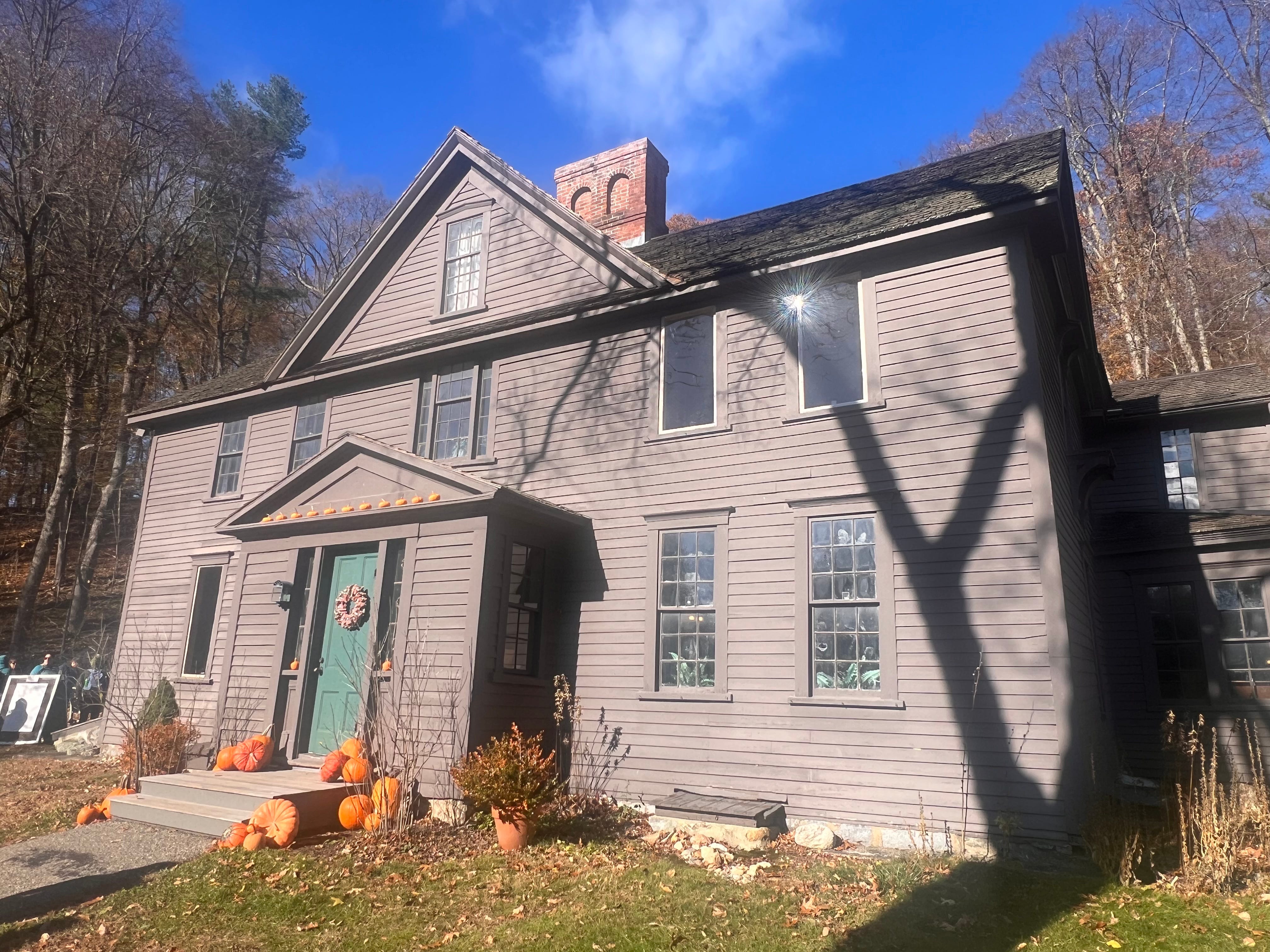
Upon this more recent visit, what I found most striking was how extensively Louisa’s life was filled with duty and caregiving responsibilities. She wasn’t just a lofty intellectual daydreaming by day and crafting texts by night. She carried the weight of providing for her family on her shoulders, and in many ways, she wrote to provide for them.
Her family devoted to an array of progressive social movements, namely the abolition of slavery, the suffrage movement, and equitable educational access for all people. They pursued these social objectives at great personal cost to themselves, marking their lives with persistent economic precarity. History tells us that Louisa wrote Little Women, specifically, not as an act of creative delight, but out of obligation and financial need. Little Women is the story her publisher saw a market for, so it’s the story she wrote. While the book generated enough income for her to take care of her family, and enable her to be a patron of artists in her community, writing it was largely a business decision.
Initially, this awareness took the romance out of the text for me. I was wearing rose-colored glasses and I wanted Little Women to be forever held in time as this sweet, uncomplicated story. But upon reading the book as an adult, and encountering the real mess and complexity of Louisa’s life, I came to see her reality as life-affirming.
We are all carrying countless responsibilities, be them social, relational, or financial. We often carry these under immense pressure with no certainty or guarantees. Our task, like Louisa’s was, is to do the best we can with what we’ve be given.
As writers there are no perfect days or seasons from which to create and share our craft. Like Louisa, we show up to the work in the midst of caregiving, loneliness, and chronic pain. Sometimes we get to create what our hearts love, other times we create what the market is asking for, and there’s nothing to be ashamed of here. Everything belongs, and sometimes, meaning will be made of these challenging realities long after we’re gone.
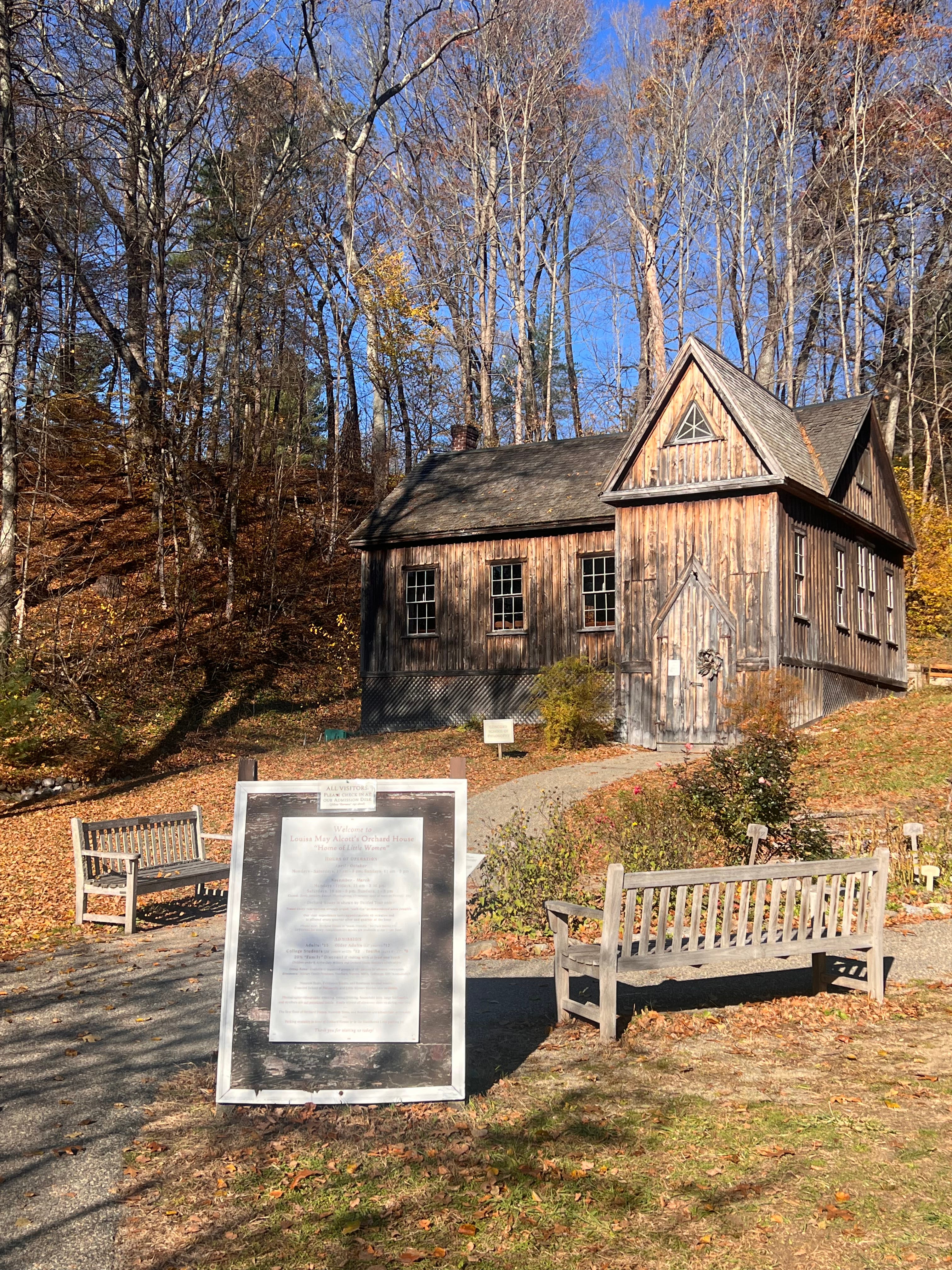
Noteworthy: The Emerson-Thoreau Amble
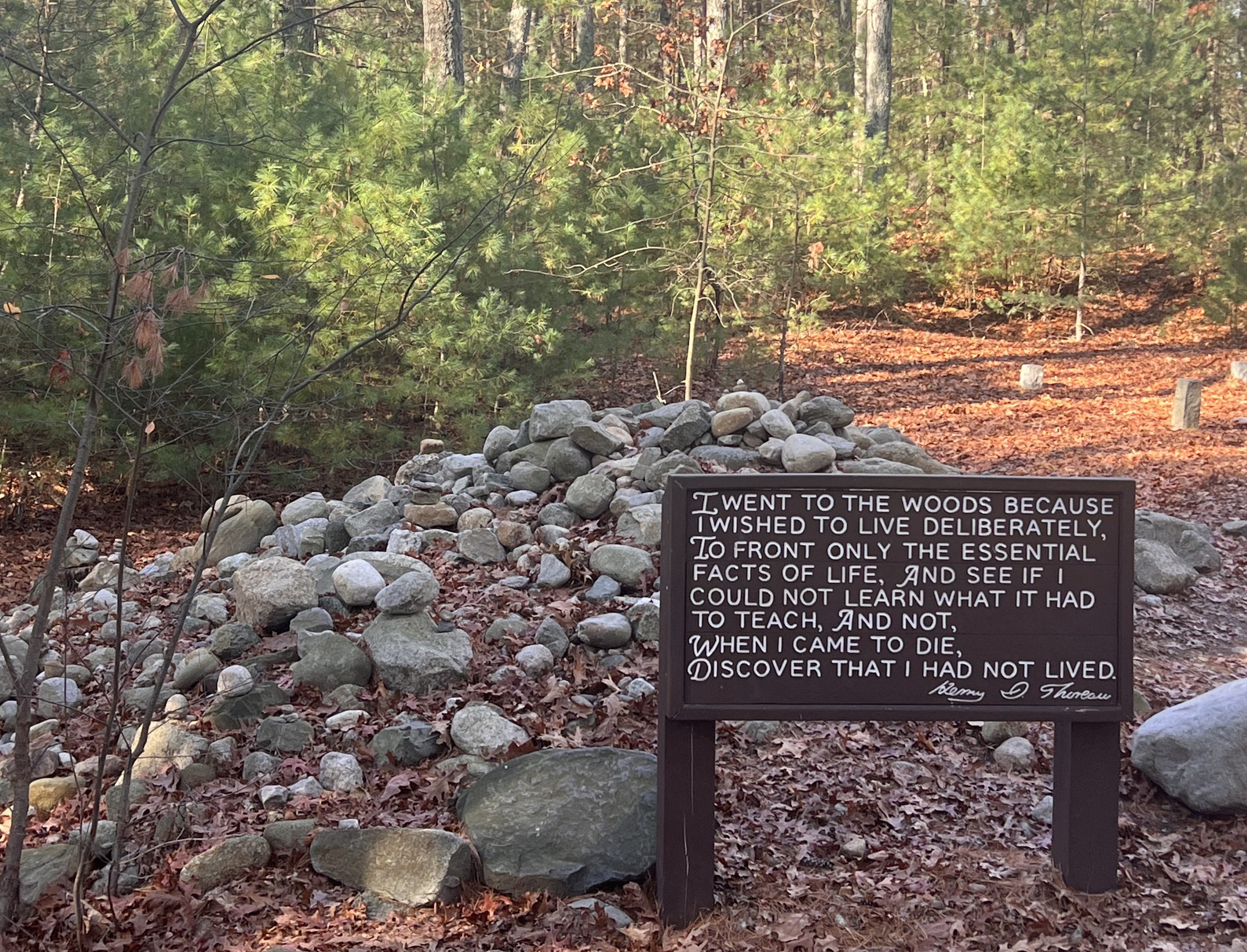
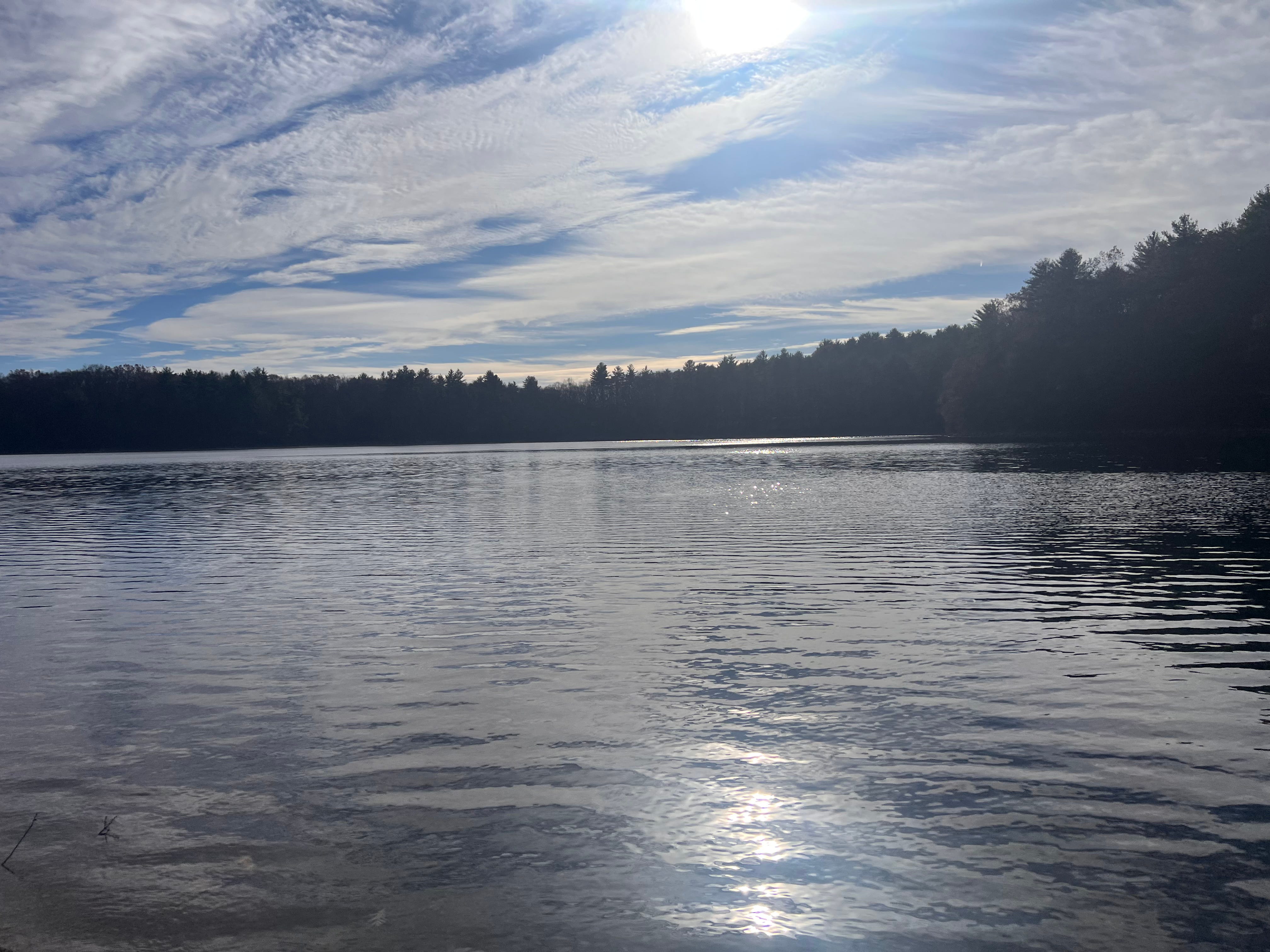
We walked the 3.5 mile, round trip, path between the homes of Ralph Waldo Emerson and Henry David Thoreau. If I’m remembering correctly, Emerson owned a 14-acre parcel of land, which includes Walden Pond. Thoreau’s shack, the one from which he wrote, was settled on Emerson’s land.
As history tells it, the two men, each a writer and philosopher in their own right, would walk this winding path between their homes, conversing and learning and sharing as friends do.
One of my favorite moments from this part of the pilgrimage was when we, as a group, walked in silence. It was quiet and cold. All I could hear was the sound of leaves crunching under our feet. I didn’t know how much I needed the quiet. It helped me listen to my own soul and to capture how this place and time was shaping my inner world. It was holy.
When was the last time you walked in silence?
What would it make it possible for you to go on a silent walk in the coming days or weeks?

Noteworthy: Cape Cod, Remembering Beth

The theme of our pilgrimage was “Grief & Hope.” One cannot linger with Little Women without holding space for how much Beth March’s death marked the March family forever.
I was privileged, on this pilgrimage, to be journeying alongside women who’d lived through immense loss, and the accompanying grief. Women who’d lost one or both parents. Women who’d lost siblings. Women who’d lost marriages and friendships. Women who’d lost pregnancies. Women whose stories, bodies, and souls carried worlds within them. It was remarkable, and sacred, and I cherish every moment I got to walk with them and hold their losses alongside my own.
Remembering Beth March at Cape Cod was a way we got to remember our own goodbyes. As Beth says to her sister Jo when they speak of death while sitting at the shore, “It’s like the tide, Jo, when it turns it goes slowly--but it can’t be stopped.”
Loss is inevitable.
I’m no expert on grief, but I am aware that as we slip into December and to the end of 2025, there are many bits of life that will not carry on into the future. There are longings that weren’t fulfilled this year and may never be. There are relationships are changed forever and will never again be what they were. There are endings, many endings, that are final and complete, and our task is to make as much peace with this as we are able. I hold this as an invitation to say goodbye, to let go, and to trust that meaning will be made in due time.
What are you grieving as we near the end of this calendar year?
What are you letting go of? What might it look like to honor this release?

Thank you for lingering with me as I’ve reflected on my time with Little Women. I loved going on this pilgrimage and I’m inspired to see where this spiritual practice of walking might take me next.
With gratitude for your readership,
Bethaney
Lectio Divina is a sacred reading practice, often applied to scripture, in which you work through four movements of dwelling on the text. Movement one features reading (or hearing) the text and taking note of its direct meaning. Movement two features meditating on the text, listening for what arises or sparks something in you. Movement three is about listening for what invitations you sense, or actions you feel compelled to take, based on a third reading or hearing of the text. The fourth movement is contemplate, to sit prayerfully with all that’s transpired in your time with the words. The sacred reading practice is a rich and dynamic practice for both reading holy scriptures and other texts.
Beautiful! Thank you for sharing! The part about grief 😭😭😭 oh my!
It brings me so much joy to hear of your pilgrimage. I think I've cried each time I've visited Orchard House. The story of the Alcott family has been a surprising source of solace and hope for me. (So much so my children bear similar names...) And grief? Even in the last week, grief has been a bigger presence than I expected. Release is a daily practice...