
Making much of wintertime
Religion, ritual, and the complexities of embracing earth-based traditions

Did you know the best time of year to plant a fruit tree is in the fall?
Maybe you already knew that. I have written about it before as it’s one of those aspects of cultivation that continually inspires me.
Fall is the best time to plant most fruit trees, and trees in general, because as it starts to cool off, the tree will feel less pressure to create foliage and fruit. As the pressure to create foliage and fruit diminishes, the tree is able to turn its energy and resources towards growing roots, the very roots the tree will need to sustain its fruitfulness in future seasons.
Incredible, right?
This is the energy I’m carrying into the winter time.
Winter, throughout the ages, has been a time of rest and retreat. In some parts of the world, this is necessary because it’s too cold to really do anything or go anywhere. In her book Wintering, Katherine May shares about how Finnish people prepare for the season. Apparently the Finns can spend up to half the year with temperatures below zero (in Celsius) which requires that they start their wintertime preparations in August. They have to chop wood, tend to pipes, repair clothing and more, all to be prepared for the potential harshness winter may bring. I don’t have much of a grid for this, given that I live in Georgia in the southeastern United States where it will likely bounce between 50 and 70 degrees Fahrenheit for the next few weeks. But still, winter is coming, and I’m wondering what it might look like to prepare for the emergent stillness and lingering darkness of this season.
One way I’ve been thinking differently about this wintertime has been by getting curious about the history of certain Christmastime symbols. It was a shock to me back in my evangelical days when folks would suggest that much of my beloved “Christian” tradition was actually not “Christian” at all, but instead harkened back to a variety of earth-based, indigenous European traditions, rituals, and folklore. For example, the practice of harvesting evergreen trees and bringing them into the home long predated the advent of Christmas. For many ancient folks, the evergreen tree’s ability to remain green during the harshness of winter was considered magical. It was believed that by bringing an evergreen tree into the home, a person would be able to keep illness, ghosts, and unwanted spirits away. In a time when nature itself seemed to be dying or sleeping, an evergreen tree was a reminder of enduring sustenance and life.
Learning more about the history of this one symbol reminds me of how our holy-days, across religions, were once intricately knit with the seasons. Of course, this is me speaking as someone who’s earliest religious formation was in various expressions of American evangelicalism, a tradition I’ve experienced as being largely divorced from time, place, and body. As a modern day Jesus follower, I was taught to say and believe all the “right things,” and I adopted all of these practices (church, Bible study, etc.) but even those practices felt disconnected from a lineage of place and meaning.
I know this isn’t true for everyone, and I know this isn’t true of every religion. I recently had the joy of learning from a Jewish woman about the land-based rhythms of her traditional practices. I also recently learned about how the Islamic calendar is a lunar calendar, tracking with the phases of the moon. And of course, there is the season of Advent, which within some expressions of Christian tradition, is part of a rhythmic, liturgical year.
But I suppose I’m sharing all of these reflections in an effort to articulate how a major part of settling into this winter, at least for me, is about reclaiming some notion of earth-based heritage and ritual.
It’s complicated, because as a Black woman, likely descended from enslaved Africans, on Muskogee-Creek land, in some ways I’m not indigenous to this place. Ancient European folklore and traditions are technically not my heritage either. So what does it mean to be present to wintertime, to reclaim some modicum of connection to land and ritual, and to honor the gifts and joy of my lived experience as a Christian contemplative? What does this look like?
Today, it looks like simply thinking about these things. It looks like asking, and to borrow from Rilke1, living these questions. It looks like receiving the coming winter solstice, and winter holy-days as gracious invitations to re-member who we are.
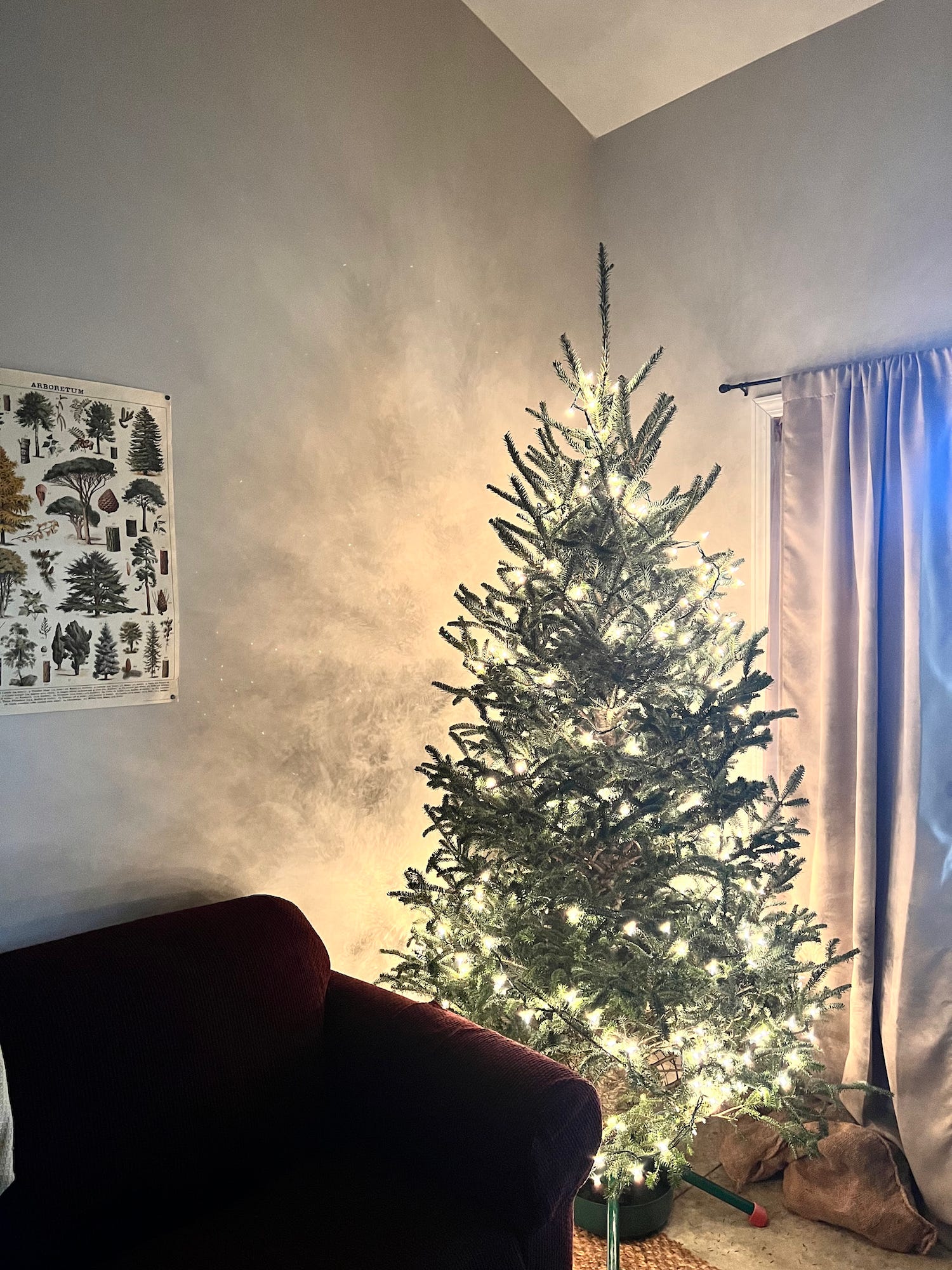
I love the word re-member, with the hyphen, because it speaks to the ways memory is actually about putting the pieces together. Re-membering our specific heritages, offering gratitude to the indigenous folks and folklore of the lands we live on—and of the lands which gave us our holy-day traditions, such as bringing an evergreen tree into our homes to celebrate sustenance and life. Re-membering faith, weaving together joy and hope after years of deconstruction, grief, and change. Wintertime is an invitation to make room for this good, slow, inner growth.
This is my last week of work before I take a month-long sabbatical. I’ll still be blogging here at A More Beautiful Way because this doesn’t feel like work to me. It is a profound and abundant joy to write these posts, share these ideas, and to interact with all of you. So the blogging will continue. But I’m excited to pause my facilitation and coaching practice for a bit in an effort to let my roots grow more deeply in the hidden places. This is one way I’m letting winter have it’s way with me.
I’m also reading Wintering: The Power of Rest and Retreat in Difficult Times by Katherine May. It is beautiful, provocative and necessary. If you’re looking for a good read, I couldn’t recommend it more.
Thank you for being here and for reading. I would love to hear your thoughts and reflections. You can also maybe share a question you’re living through in this season. I can’t wait to hear from you.
Much love,
Bethaney
Rainer Maria Rilke, poet