
On being Christian again
A surprising journey to a place I thought I'd never be

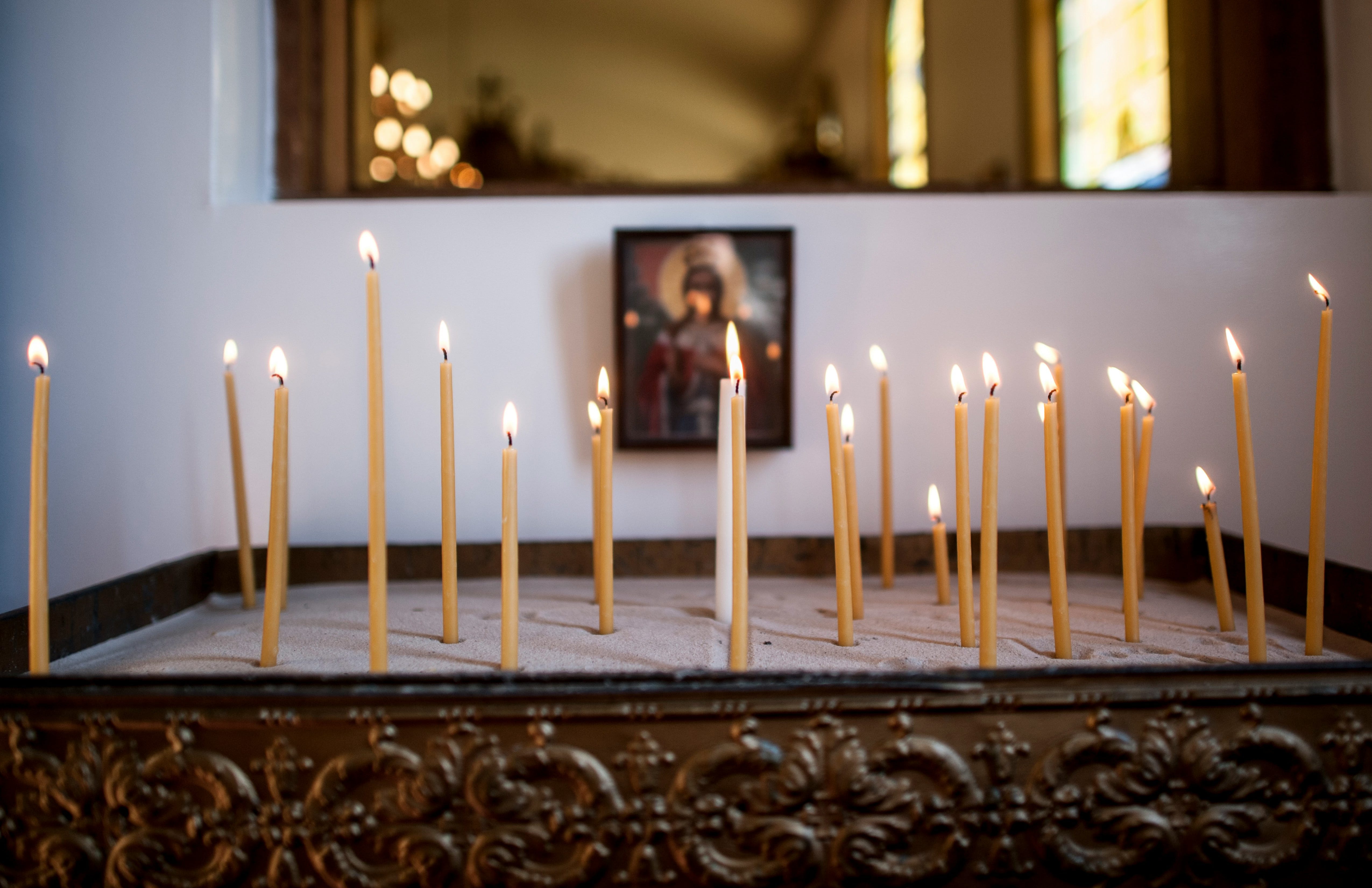
Context A: Our current political landscape has filled more of my mental and emotional space than I care to admit. My heart has been moving back, forth, and between disdain, disregard, and despair with each new blow to what I once held up as these resilient U.S. institutions. It’s heartbreaking, honestly. I have many more thoughts on this, but they are not ready to be shared yet. I will be writing my slow take on the political situation in the coming weeks. Stay tuned.
Context B: I wrote the following piece many weeks ago. I’ve been holding it close, unsure of if or when to share it. Like many of us, my spiritual journey is always evolving. It feels untrue to plant my flag here or there and to pretend like it will never move, never waver, never change. Our spiritual lives are like the seasons. Only the test of time will grant insight to what’s lasting, to what remains. I’ve chosen to go ahead and share this piece because I want to honor the version of me who wrote it. I’m experimenting with saying what I know to be true right now, trusting you all as readers to hold my humanity as a changing person right alongside me. As usual, I hope this mini-essay meets you with connection and grace. I look forward to hearing your thoughts.
“Write from where you’re at,” my priest said.
“There’s a lot happening where you’re at right now.”
I’d expressed to my priest that being in the process of conversion had disoriented my relationship to writing. He encouraged me to write from where I’m at, right here and right now. So today, that’s my goal. I’m writing to let you into the messy middle of my process. Welcome.
First things first: yes, I have a priest.
Weird, right?
Well, it’s weird to me.
Over the past nine months or so, I’ve been converting to Orthodox Christianity.
The fact that this has been an eight-months-or-so long process was one of the aspects of the tradition that drew me in. Nearly every parishioner I’ve talked to over the past eight-months-or-so has expressed consistently, "Take your time. There’s no rush. You can be a catechumen1 for two years, ten years, or for however long you need.”
I’d never been to a church that actually tried to slow you way down or tried to keep you from joining too quickly.
Selah.
It was the grace and the space I needed.
A surprising change of direction
While my journey into the Orthodox Church was made simple and spacious by the wise and faithful parishioners in my path, my internal process was full of hurdles. Hurdles is the exact right word. There were multiple, persistent barriers I had jump, move, think through, or simply accept in order to move forward. In my experience, understanding the Orthodox tradition from the outside is quite difficult. I was out of my depth so the hurdles loomed large.
I was unfamiliar with the complexity and rituals of the weekly liturgies, seasonal feast days, and services of prayer and preparation. I was disoriented by the role and authority of a priest who I was supposed to call “Father.” I was challenged by the male-only priesthood. I was caught off guard by the few depictions of “blackness” I perceived from iconographic paintings. I was daunted by the fasting regimen. I was challenged again and again with details I found confusing at best and uninviting at worst. It was a doozy, hurdle after hurdle, question after question, resistance after resistance.
And yet…
And. Yet.
There was the experience of my actual heart.
My heart felt at home.
I’m not an apologist or a theologian. I cannot make an academic or even a historical case for my journey into the Orthodox tradition. What I can say, however, is that pretty much everything I ever learned about Christianity, about the Bible, and about what it means be faithful to the path of Christ, all finally made sense when I immersed my life into this particular expression of the faith. It all made sense, and not in a complicated, intellectual, or abstract way. This was an embodied experience of profound knowing. No number of words or rationalizations could do it justice.
Prior to becoming a catechumen, I occasionally tagged along with my husband Alex on his visits to the church. I was curious about what he was learning but I was absolutely not interested in the Orthodox path for myself. I was at least knee-deep into a sort-of New Age, occult-y, Christian-adjacent syncretistic spiritual practice at this point, so the idea of shedding my personally-crafted religion for what I perceived to be a rigid, exclusive, way-too-hierarchical club was the furthest thing from my imagination.
And yet, as I stepped into the doors of the church, surrounded by the iconography of women and men who’d gone before me in the faith, and met by the incredible love and care of the parishioners in attendance, my heart kept cracking wide open.
It was like sunlight breaking through the clouds after a morning rain.
Empty, on my knees
I didn’t realize it at first, but while I was writing and sharing online about creating a nourishing spiritual life, I’d grown empty on the inside. It’s strange to write about soul-emptiness because it’s tough to describe. You have to be willing to truly face the emptiness within yourself before it will let you see it for what it is. In our modern lives, we are good at hiding and filling ourselves with waters that don’t quite quench our thirst. I’m great at this kind of self-deception. I will work, achieve, give talks, create content, volunteer, and give my everything to simply avoid the void inside. When the “good works” stop working, I tend to move towards the less savory vices of shopping and drinking too much. It’s all a distraction from the real, especially when the real is painful.
I was in pain.
One afternoon last summer, I found myself alone on my office floor weeping. I was undone. I couldn’t lie or hide it from myself any more. Despite all of the “good” things unfolding in my world, I knew without a shadow of a doubt that I had deep inner needs that no number of affirmations, tarot card pulls, worship songs, breathwork sessions, or astrological readings could fill. So I did what my parents and my ancestors taught me to do: I went to God. I prayed.
God, I’m so empty. Please meet me. Please fill me. Please.
I cried, I prayed, I felt the weight of my need. When I was done, I got up and went back to my life.
I believe God hears our prayers. I believe God is intimately acquainted with our desperation, our longings, and our needs. I believe God waits for our consent to move, to act, to liberate, and to heal on our behalf. I believe God is there, close by, with an ever-present gaze on our stories, ready and willing to meet our surrender with his Yes.
Our work is to cultivate enough humility, and even trust, to ask for help. But I know, I truly and seriously know, these are not easy things.
It would take months for the kind of healing I was longing for to unfold. Once the process began, I knew it was an answer to the prayers I’d spoken through tears on that one afternoon. I didn’t know this answered prayer would eventually call me to cut ties with my tarot practice. I didn’t know know this answered prayer would call me to stop asking the stars to tell me who I am. I didn’t know this answered prayer would require that I pause offering spiritual direction. I didn’t know this answered prayer would disrupt every relationship in my life in which hiding or lying had become a habit. I didn’t know the cost, and I certainly didn’t know of the hurdles I’d be asked to jump, move, think through, or accept in my process of change. And yet, if given the choice, I’d pray the same prayers all over again. To be met by God in our lowest places is worth the cost every time.
On conversion
Conversion is a liminal space, meaning it’s in between, neither here nor there, not this and not quite that. It’s a transition. It’s like taking off one pair of glasses because they don’t fit anymore and putting on new glasses, but your eyes haven’t yet adjusted to the clarity your new glasses offer. Either way, your vision is a bit blurry.
I took off my Protestant evangelical glasses many years ago. I suppose it was my so-called deconstruction. Those glasses were not only ill-fitting, but they were harmful and made it impossible for me to see with any real substance, connection, or reverence for the holy.
In the years that followed, I picked up what I can only call a set of New Age glasses which were masquerading as ancient, “indigenous” wisdom. “Masquerade” is the operative word here. The philosophies and practices I’d given myself over to were insightful to an extent, but they were ultimately partial, and perhaps even false. Over time, these lenses started to feel eerily similar to the waters that had captivated Narcissus’2 attention. My worldview became fixated on “me doing me,” on “cutting off anything that didn’t serve me,” and on all sorts of other self-aggrandizing and self-deifying affirmations. While these are popular perspectives in our time, my weariness and soul-deep hunger exposed these stories for what they were: half-truths. It’s impossible to see God, to see your neighbor, or to even rightly see yourself when you’re blinded by what I would now describe as a sort-of self-exalting delusion.
Now, I’m holding up these new glasses and while I can’t see everything, I’ve seen enough to know this path is worth walking.
I’ve seen my heart come alive, even as my intellect has labored to catch-up with what my soul knows to be true.
I’ve seen my sense of personhood restored with a much needed firmness established within my innermost frame, affording me gifts of peace and steadiness through life’s storms.
I’ve encountered the truth that Christianity has deep and lasting roots in Africa which affirms my longing for a faith expression rooted in the traditions of my ancestors.
I’ve come to understand how the Church’s sacraments—baptism, chrismation, communion, ordination, confession, healing, and marriage—all offer remedies to many of the societal aches plaguing us personally and collectively.
I’ve been met by the Theotokos, the Mother of God, who is teaching me what it means to be a wholehearted, truly empowered woman. I’m being discipled by her and by the innumerable women saints who are revered, honored, celebrated, uplifted, and remembered in holy Orthodox tradition. My dignity as a human is being established in ways I could have only imagined in my former years. I rejoice in this sacred homecoming and have much more to share about this in the months and years to come.
These are only beginnings. They are fractions of how God has met me and changed my life, again. I’m in awe of God’s rich faithfulness towards me. I’m in awe of the ways God meets us when we are sincere, honest, and humble enough to ask.
Welcoming the mystery
Depending on who you are, how you found my blog, and at what point our paths crossed, this post may be surprising. It may seem like it’s a plot twist or like it’s out of left field. Yes, maybe. I’m still surprised by it all sometimes. But as I’ve written about here on A More Beautiful Way, the Divine is often working in mystery, in the hidden places, under the soil, and within the deeper root systems of our lives. The Divine is waiting to delight and surprise us, if we have eyes to see and ears to hear.
I would say among our biggest struggles as modern people trying to find our way in the world, especially our way in a faith as counter-cultural as Christianity, is that we really must do the hard work of being willing to say, “I’m wrong,” “I don’t know,” “I’m willing to change my mind,” etc.
A few months before I committed to being a catechumen, I found myself hung up on a verse in First John where the writer speaks of “the lust of the flesh, the lust of the eyes, and the pride of life…” As a young person in evangelical Christianity, I could easily conceive of the “lust of the flesh” and the “lust of the eyes.” But the pride of life was much harder for me to wrap my mind around. I was young and hadn’t come to know anything yet. But as a woman my mid-30s, I’m now well acquainted with the pride of life. It’s the subtle though persistent refusal to believe that I could be wrong about anything. The pride of life, in my own body, sounds like, “I know. I’m right. I will not be moved.” Grappling with this type of orientation is a likely challenge for any of us seeking to not only encounter a more beautiful way, but perhaps the most beautiful way, which is a path of devotion and surrender to Christ.
I will leave this here for now. There is more to be said, but I’ve opened this door in hopes of not only letting you know where I’m at, but to create space for conversation. I would love to hear from you: what’s resonating? What’s creating dissonance? What’s confusing? And perhaps most significantly, what invitations are you sensing within?
Please comment or email me. I can’t wait to hear from you.
With love and anticipation,
Bethaney
Reader Survey Still Open
Thank you to those of you who’ve responded to the survey. If you haven’t had a chance to check it out, it should only take about 5 minutes (if that many.)
You can take the reader survey here.
Links to Stay In the Loop
/ Website
/ Instagram
/ Podcast
/ Archive
Catechumen means “student” or “learner.” In this context, I’m a student of Orthodox Christian history, tradition, theology, and spirituality. They say being a catechumen is likened to being betrothed to the church. The intention at this stage is for me to join the church, or to be received by her, at some point in the future. But to my point above, there is no rush. Some folks are catechumens for a short while, others for a very long while. The invitation is to walk with God, participate in the life of the church, and to trust God with the timing, process, etc.
In Greek mythology, Narcissus is a character who fell in love with his own image in a pool of water. When he realized that the image he’d fallen in love with was only a reflection, he was filled with despair and took his own life.
Bethaney, this is just utterly beautiful in the deepest sense...thank you for taking something so tender and true and sharing it with us all. I know that takes a lot of vulnerability and strength. Your feeling of finding "home" in the Orthodox church - in an indefinable, experiential way - what a profoundly comforting feeling!!
And the journey from a la carte religious devotion (I was there too, friend), where the ego rules the day, to a surrender to Christ...what absolute peace.
I hope you'll keep us posted on your conversion, if you feel called to do so; it's a joy to get to learn more about the process. I've never attended an Orthodox liturgy, but am so curious about them. I've never managed to find a denominational expression of Christianity that feels like home to me, but rather local churches whose people feel like home...as you so beautifully said, who knows where the path takes us, but for now, that's where I'm at.
Loved this Bethaney. Thanks for bringing us along the journey.