
On taking flight
Traveling for work without compromising what matters most

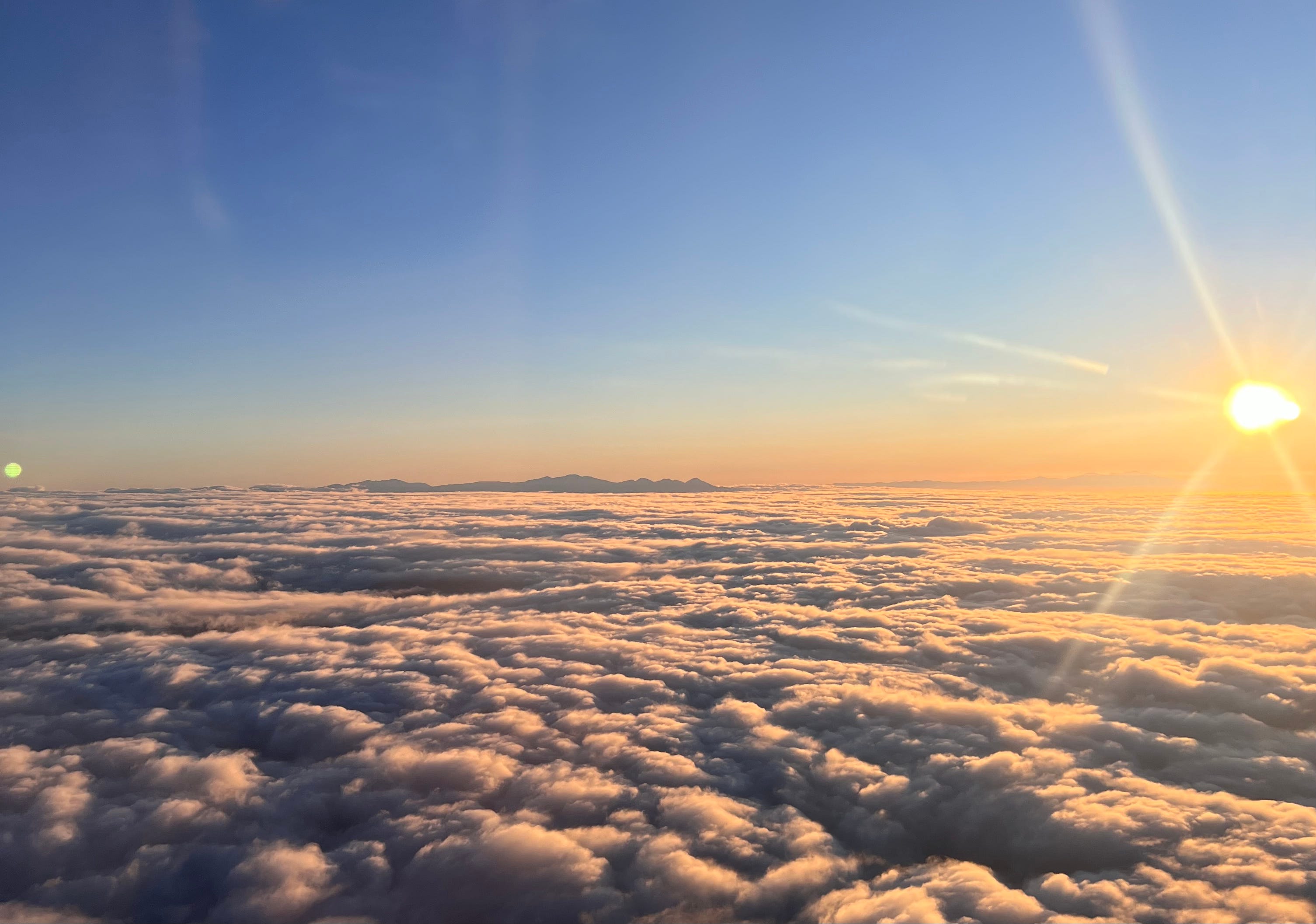
Today’s post is perhaps more practical than what I usually share here on A More Beautiful Way.
A few moons ago, I wrote about “being grounded” after experiencing an anxiety attack on the heels of a challenging season of work travel. In the aftermath of that experience, I put myself in a no-fly zone and dedicated the last two months of the year (November and December) to literally not leaving the ground. It was one of the best decisions I’ve ever made. The last two months of the year were healing for my relationships, for my body, for my mental health, and more. It was truly an essential change and my whole world is the better for it.
With another calendar year underway and new work obligations cropping up, I’ve had to really think through what my travel priorities are for 2025. While it sounds good to be at every meeting and to connect in person with colleagues from across the country, last year taught me the importance of not losing myself for the sake of even a very good professional mission.
So I thought I’d share a bit of my decision-making process with you. I know I’m not the only one out here trying to live a well-rooted life while also managing a full-time career. Here are a few of the questions and processes I move through to help me determine what gets my “yes” professionally and what must receive my “no.”
One: Big rocks first. What are my actual, whole-life priorities?
Years ago I attended a leadership conference where a speaker gave a talk on priorities, or something along those lines. I wish I could remember who it was because I’d surely give them credit. For his talk, he had a vase, a collection of rocks, and some sand. He then did two things. First, he filled the vase with sand and then tried to put the big rocks on top. While the sand had plenty of room, the big rocks didn’t really fit. So he emptied out the vase and filled it again, but this time, he put the big rocks in first. After filling in the vase with the big rocks, he poured the sand on top. It was amazing to see that with the big rocks in place, a surprisingly large amount of sand was still able to fit. But when reversed, with the sand in first and the rocks on top, there wasn’t enough room for the rocks.
The large rocks represent our big priorities—those things in our lives that are foundational to our purpose and wellness as humans. The sand represents all the small things, not even priorities, just the little tasks and obligations that quickly fill our days. By putting in the big rocks first, you ensure that there’s room for what matters most, and then there’s margin for whatever sand you’d like to add.
What are your big rocks? What are your actual, whole-life priorities? Start here.
For me, those big rocks are my personal health and wellness, my relationship with My Love Alexander, my ability to care for Cedar Wilde which is my home, and then those relationships that are closest to me i.e. with my parents, close friends, and my church community. Those are my big rocks. My career, while I value it highly, is not the biggest rock for me. I have to remind myself of this from time-to-time because the pressure to produce and achieve is real! But at the end of the day, big rocks go in first. Which means that if work travel compromises my ability to be well, to love my people, and to care for the parcel of land that’s been entrusted to me, then I have to make adjustments.
Two: What are my top three professional goals for the year?
Asking this question has been critical because it’s helped me narrow down what’s worth doing at work. My job is unique in that I am a founding executive director of an organization, so it’s a startup. Systems and processes don’t exist yet and we have to make them. If we were already an established organization, then we could move differently, but until the foundations is in place, we have to be hyper-focused on building it. I’m also forming a new team, creating a culture, and designing conditions for us to perform well together. This requires emotional availability, curiosity, and presence.
I share these details about my own work priorities because in narrowing down what matters most for my work right now, I have clarity about the fact that I actually need to be grounded enough to do the nitty gritty work of organizational development. For you, the priorities will be different. Ultimately, you’ve got to ask yourself, what is most important right now? What can only I do? Let your responses inform how you allocate your energy and time. If traveling impedes your ability to do your most important work well, you may need to make some adjustments.
Three: Last but not least, what is my body saying?
In late December, I made a hurried choice to attend a workshop series in Chicago. I’d admired the facilitator for some time and felt a strong pull to participate in the learning experience. I tend to be a very gut-motivated person, so when I feel a “yes” in my body, I move forward without thinking too much. So it was with this experience. I reached out, booked flights, booked lodging, and marked the time on calendar. However, after booking the trip, my body felt uneasy. I began reflecting on my responses to the first two questions from above, and started to sense that this learning opportunity was poorly timed given my priorities. I would have to rush from a work event to the airport, compromising my ability to take care of my physical and mental wellbeing. I would have to spend three nights away from home instead of my usual two, which compromises my ability to stay connected to what’s happening in my home life. I would have to invest my limited emotional energy in a new set of relationships, which is fine, but would compromise my emotional availability to my new team and organizational partners. My body was uneasy. As I considered why, it became clear that booking this experience in Chicago wasn’t the right fit. I cancelled the trip and felt great about it.
Once you’ve set your priorities and outlined your top professional goals for the year, how does it all land in your body? Does it feel good and aligned? Does it feel strained? If you feel discomfort, is it the sort that you’re meant to push through for the sake of reaching a goal or is it the sort that’s actually asking you to make a different choice? I can’t answer these questions for you, but when it comes to organizing your time and planning out your work, I find it helpful to at least ask the questions.
Extra insight
There are a few additional ground rules I have for traveling and they keep me sane. Here’s a non-exhaustive list for you to consider if it helps:
Make it a day trip if possible. Admittedly, this is easier for me than it might be for others because the Atlanta airport is massive and almost always has multiple flights to everywhere. But if I can catch a 7:00 AM flight to a location and then be home by 10:00 PM that night, I’ll do it for the sake of sleeping in my own bed. If I do a day trip, I try to take the following day off or to have it be a no-meeting day. This gives me space to recuperate.
Two-night cap on overnight trips. If I have to spend the night somewhere, I try to stay no more than 2 nights. It’s just the best flow for my body and for my family life. Occasionally I’ll do longer trips if necessary, but I try to keep those to a minimum because the whole-life recovery from a longer trip is a pain.
Sleep over everything. I only do early morning flights for day trips. Other wise, late morning, afternoon, and evening time flights are perfection. I get a full-night sleep the night before and I can have a slow morning getting packed and out the door.
There’s more I could share, but I’ll stop here. I really do think there’s an art to traveling for work and it flows from knowing what your priorities are. If you travel for work, I’d love to hear from you. What works for you? What lessons have you learned? What practices are critical for your flourishing in the midst of your professional life?
For me, gratefully, “no-fly” November and December turned into “no-fly” January and February. I’ll be doing a couple of work trips these first two months of the year, but they’re in driving distance. My first flight of the year, Lord willing, will be in early March. I’m so proud of myself for setting limits and for learning, slowly and over time, what this dear little body of mine can handle.
Let me know your thoughts and questions in the comments. I could talk about this for days, so let’s dig into it together!
Much love,
Bethaney
I’m so with you on needing to implement some fly rules. I committed for 9 months, 3 days per week … and while it was an impactful work opportunity, and I made the best of the time there (staying near the water so I could walk outside every night after work, picking up groceries for my stay right after landing, etc), it wrecked my wellness. Sleep was futile, and my body was exhausted.
Celebrating your priorities and focusing on what works for you!!
I’ve recently implemented a few new efforts: building in a compensated rest day with my clients who need me to be onsite (a paid day when I return home), and I build in a rest day in the middle of my onsite time (sometimes that’s a thrift store day, or time spent outside, or just napping). I’m only a few trials into it, but I’m liking it so far!