
Rites and remedies for anxious minds
Daily rituals of nourishment, restoration, spaciousness and release

Anxiety has been a constant companion of mine.
Brought on by fear of the future, disappointment from the past, and uncertainty in the present, my journey has been one of reckoning with this noisy and demanding part of myself.
Over the years I’ve tried all sorts of healing practices and modalities to ground me in the midst of the spirals and turmoil anxiety brings. In my young adult years, it looked like praying constantly for God to take the anxiety away, which hardly ever worked. So I would pray harder and journal more and make my requests known to God and anyone who would ask me how I was doing. It was exhausting and ineffectual. Sometimes I’d be met with momentarily relief, but none of those practices got to the root of things.
Eventually I landed in therapy, which was actually helpful for a time. I learned how to regulate strong emotions. I was taught practices to help me live in the present. I loved therapy and still do. But it has its limits, especially given that it only fills one hour in any given week. I needed support that could be with me day-in and day-out, or even in the middle of night which is when my anxiety would be at its worst.
It wasn’t until a few years ago that I began to experience a shift in how anxiety moved in and through my life. It wasn’t about a prayer or about talking it out with someone safe, though I have nothing against those things. My relationship with anxiety began to shift as I integrated daily rituals of nourishment, restoration, spaciousness, and release into my life.
The word ritual is an extension of the word rite, i.e. “a formal act or procedure of religious-like performance.”1 Ritual speaks not only to the intentional choices we make to cultivate a meaningful spiritual or religious life, but also to those ordinary activities that make us who we are. Sunday night football is ritual. Listening to your favorite podcast as soon as it comes out each week is a ritual. Weekly workplace meetings are rituals. Pressing your hair or doing laundry can each be a ritual.
Our lives are imbued with rituals because we need them to feel grounded and whole.
Here are some ways to integrate rituals of nourishment, restoration, spaciousness, and release into your everyday life, especially if you’ve got an anxious mind like me.
Nourishment - tending to the body
I’ll never forget when I realized a connection between the number of meals I consumed in a day and the anxiety I was experiencing. On days when I woke up, ate a good breakfast, waited until mid-morning for coffee, and then prioritized eating lunch and dinner, my anxiety was lower. On days when I woke up, had coffee first, skimped on breakfast and worked through lunchtime instead of eating lunch, my anxiety would be at an all time high.
While I know our relationships to food and our bodies are varied, the number one ritual for addressing anxiety in my life is tending to my body. When spirals of worry emerge, I go through a basic checklist:
Am I hungry?
Am I thirsty?
Did I get good sleep last night?
When was the last time I experienced pleasure?
What, if anything, does my physical vessel need?
Sometimes, my body needs to go do something. This past weekend, I was ruminating on a challenging relationship and I felt stuck. So I put on my overalls, laced up my work boots, and went outside to plant my willow tree. As I worked with my body, I felt clarity emerge in my mind. Barbara Brown Taylor refers to this as tending to the domestic arts,2 i.e. the all the tasks we have to do around the house that become an opportunity to get out of our heads and into whatever sense of purpose is before us.
Body-oriented rituals are essential. As we tend to our physical vessels, we are not only supporting ourselves physiologically (i.e. nourishing ourselves by way of food and water) but we are creating wells of capacity to weather the storms of life.
Restoration - coming home to yourself
Another ritual that has saved my life over the past couple of years has been taking baths. This one might feel a bit out there for some of us. For others, this is already part of your routine.
Baths are little baptisms. You go under the water, submerging yourself and all that the day carried with you, and then you emerge refreshed, restored, and renewed. There is something powerful about lighting a candle, saying a prayer and releasing the worries and stressors of the day into the water. If you don’t have a bath tub, no problem. You can do this in shower. It’s all about the intention.
Restoration is not only about rest, though resting is part of it. Restoration is about getting back what you’ve lost. It’s about coming home to the fullness of who you are. My practice is to take a bath with the intention of releasing the day’s tensions. Feel free to try it. But the real invitation is for you to get clear on the practices that restore you. What are those things that bring you back to your center? What are those rituals or practices that remind you of who you are?
For example, my partner thrives when he has an entire day to go get lost on mountainside somewhere. When he is able to go on a hike and take his time to get to know a new wild place, he returns home in a completely different state. He’s been restored by the community of creation. It’s a beautiful thing to see.
So what are those daily, weekly, or monthly rituals that restore you? That help you reclaim the pieces of yourself that you’ve lost along the way of living your life?
Do those things and see how your relationship to anxiety changes.
Spaciousness - claiming the space you need to just be
One of the tenets of A More Beautiful Way is to let nature take the lead. I grew up in a faith tradition that didn’t make much of Creation or the natural world. But I was raised by a farmer, which means that nature’s gifts and wisdom are knit into the fabric of my existence. I believe this is true for all of us. Whether you grew up on a block in New York City or if you come from the corn fields of Iowa, we all have a nature story. The spaces, and spaciousness, nature creates for us are nothing less than healing.
Getting out into spacious, natural places rewires our nervous systems. There’s a reason we feel more grounded when we go on mountain getaway. There’s a reason we feel rejuvenated after a few days at the beach. Wild, spacious places form our souls in ways that ideas, books, and theologies can never reach.
I don’t understand it logically and I don’t try to. I accept the gift for what it is.
Spaciousness is a remedy for anxiety because anxiety itself is a narrowing of perspective. We can integrate spaciousness physically by way of visiting natural environments that inspire rest, breadth, and awe. We can also integrate spaciousness in our schedules by blocking off intentional time to attune to Creator’s presence and activity.
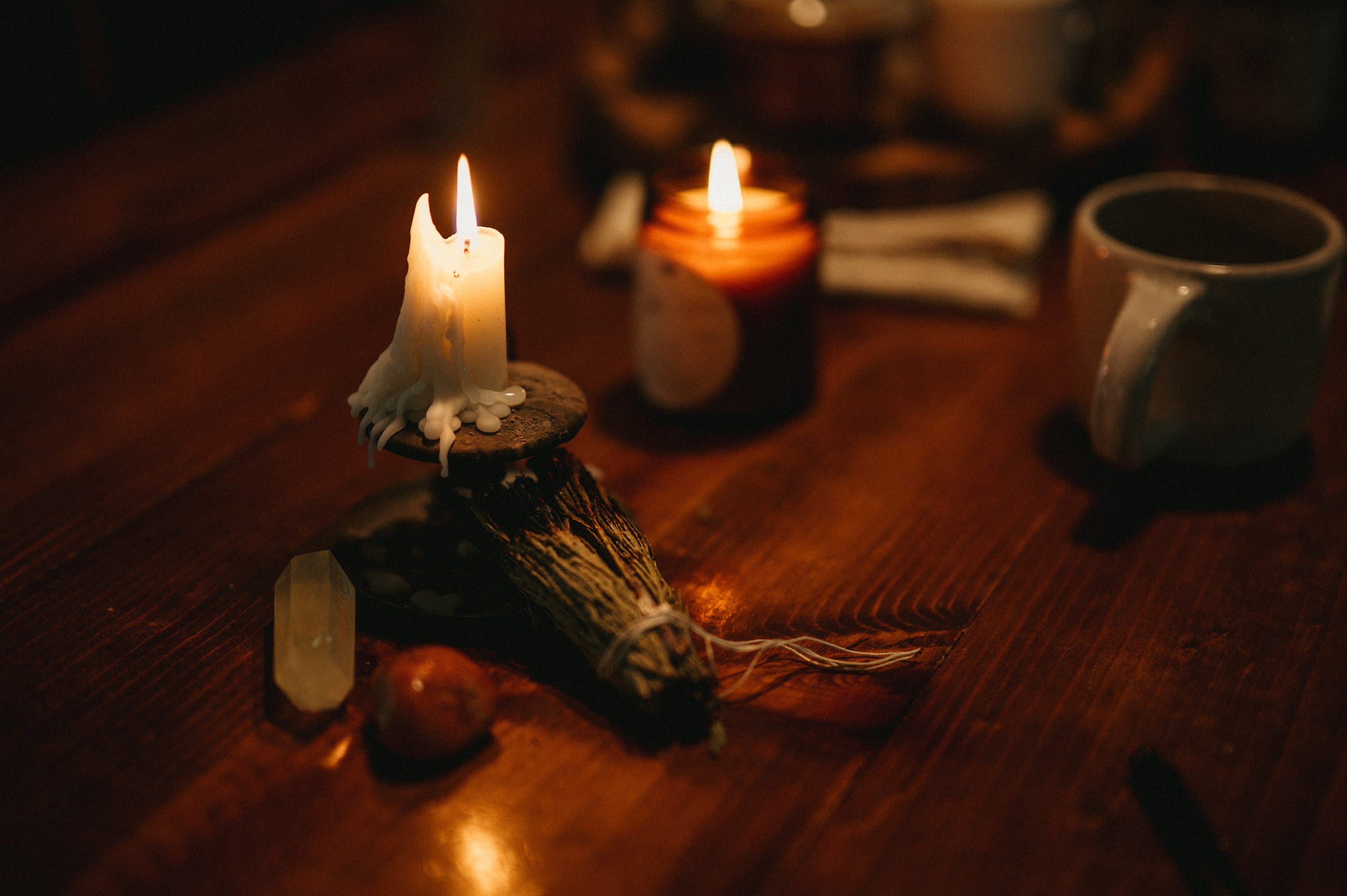
For me, this looks like daily quiet time at my altar. On the mornings I’m rested enough, I’ll wake up early and greet the sunrise as I say morning prayers, meditate on artwork, or journal through whatever is present at the moment. In a week, I try to have one or two days of “receptive time” where I’m able to keep my schedule open and follow wherever Spirit and my longings lead.
It will look different for you, but the invitation is to explore where you can integrate a ritual of spaciousness, physically or in terms of time, into your daily and weekly life.
Release - letting go
We are created for ritual. This means there will be times when the rituals we’ve been practicing are actually taking more life than they give.
It could be a ritual of having a daily gin & tonic to transition out of the day’s work. It could be a ritual of participating in a community that doesn’t value or affirm who you are. It could be a ritual of making yourself smaller so that you don’t inconvenience anyone. It could be a ritual of believing that you have to do life alone so you never ask for the help you need. It could be anything.
One practice to support your journey of relating to anxiety in new a way is to release those rituals that no longer give you life.
I want to be careful here, because there is a momentum in our day towards cutting off anything or anyone that creates discomfort for us. “Walk away from what no longer serves you” is motto for our times. But that’s not what I’m talking about. There are seasons where we live through challenges in our relationships and in our work. Despite them being difficult or painful, they are in fact refining us and making us more of who Creator intended for us to be.
It takes discernment to know which life-draining activities are ultimately for your flourishing and which ones are ultimately stunting your growth. If you aren't sure, I recommend processing it with a therapist, spiritual director or trusted friend.
Once you identify those rituals that cannot come with you into the future, what might it look like to let those things go?
I have beloved practice of writing out whatever I want to release on a piece of paper and burning it in a little glass jar on my altar. I’m always amazed by how freeing and clearing it is to say goodbye in this way.
I’m not sure what release will look like for you, but it’s worth exploring.
In Closing
Rituals sustain us in the midst of uncertainty. They anchor us, like rungs on a ladder or stones as we cross a creek. Our rituals tether us to the present moment in ways that help us move forward, despite the challenges a day or season may bring.
Integrating daily rituals of nourishment, restoration, spaciousness and release have changed my life. They’ve lessened my anxiety. They’ve taught me how to relate to myself in more beautiful ways.
I want to hear about your rituals. I want to know what brings you home to yourself.
Express yourself in the comments below.
Until next time, be well.
Adapted from the definition found here: https://www.etymonline.com/word/rite
This reference comes from pg. 120 of Altar in the World by Barbara Brown Taylor