
Summers can be slow too
Lessons in noticing, pruning and the fruitfulness of life

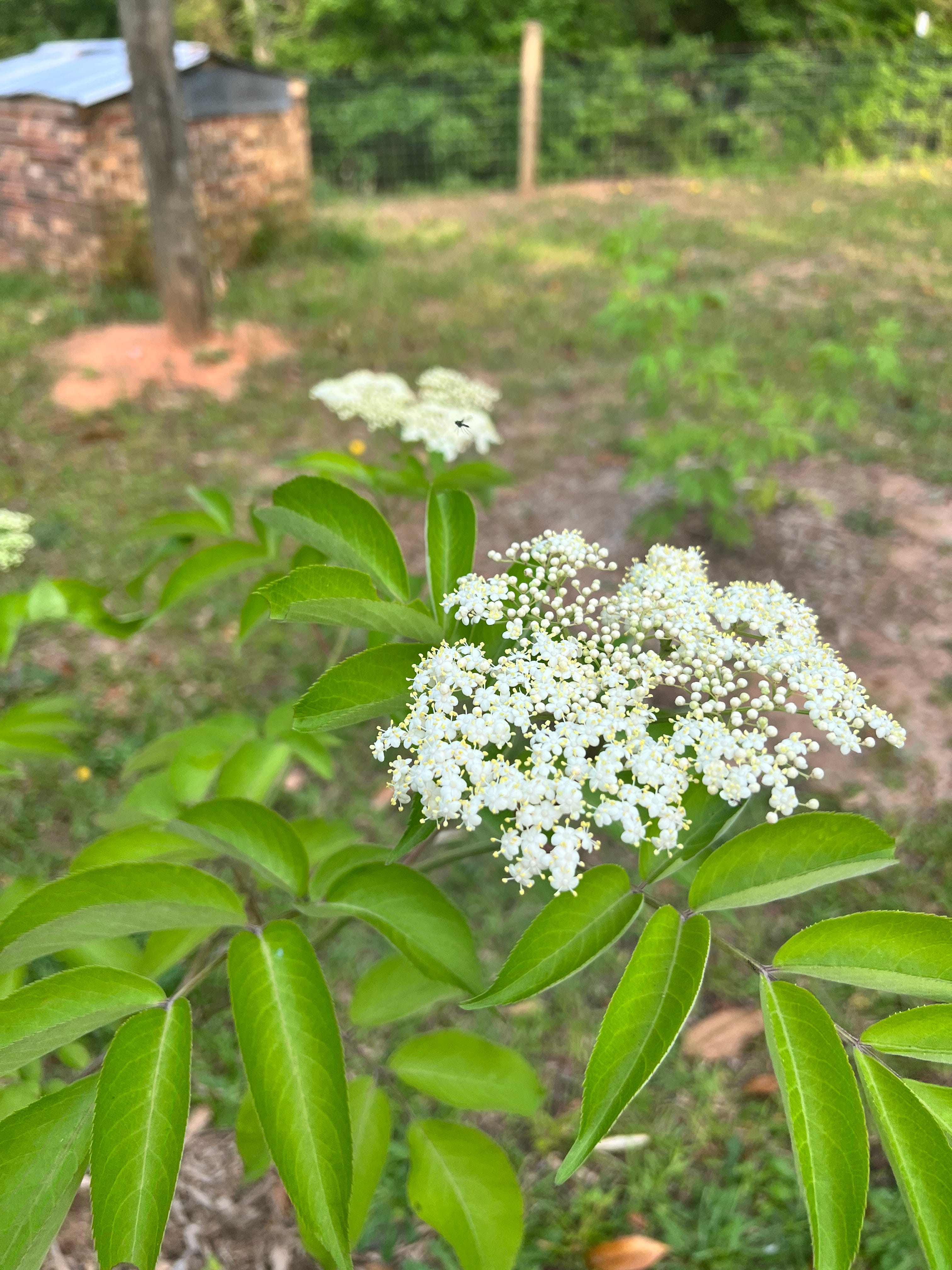
The wheel of the year keeps turning.
Spring has been full of good work as Alex has labored to plant our first ever market garden, which we’re hoping will be a source or flavorful, nutrient-rich produce to sell in our local community. We’ve also planted a (mostly) native flower and herb garden just outside of my office window. It’s my favorite. We moved all of our bird feeders to the flower and herb garden as well, which is making for quite the little bird sanctuary as purple finches, tufted titmice, cardinals, sparrows, and even a mockingbird or two are finding their place in this little ecosystem we’re co-creating alongside them.
The past few weeks have been full of lessons in slow living, all of which could be their own blog posts, but as I prayerfully considered what to write about today, I had the sense that I should just share all of it.
One of the spiritual practices I’ve been thinking about a lot lately is noticing. It’s the practice of simply paying attention to your life. It’s the practice of noting the inner movements of your spirit and of taking a moment to check in with the sensations you feel in your body. It’s the practice of observing your thoughts, both the content and the quality of them. It’s the practice of taking note of how your physical environment and relational contexts are shaping you, as well as of how you might be shaping them.
Noticing is the practice of bringing the little details of your life into your active awareness. Sometimes you notice so that you can change something. More often than not, I find, noticing is about being in the practice of paying attention and not so much about changing anything. Awareness of your own presence, as well as of Divine presence, is really the whole point.
How much sadness and disconnection do we feel because we aren’t awake to our lives? How much do we miss because we’re moving too fast and doing too much? How might we slow down, become aware, and truly feel the life unfolding within and around us?
As I’ve been in the practice of noticing, here are a few observations I’ve been holding close:
One—summers can be slow too.
In my thinking, living seasonally used to mean that winter was for rest, spring was for gentle work, summer was for hustle, and fall was for cutting back in preparation for another winter of rest. While this still has merit, as we move through spring and into summer, I’m finding that summer can be slow too. Yes, the hope is for fruitfulness as we’ve planted our gardens and await fresh produce to fill our home. But is fruitfulness the same as anxious striving for growth? Is seasonal growth the same as grind culture’s hustle for productivity? I think not.
The potential fruitfulness of summer, and the labor harvesting will require, flow from a rootedness in a place. A berry shrub or a fruit tree bears fruit because it’s planted in the right place, it’s nourished, and it’s had time to mature. The blueberries aren’t straining to be created. The flowers aren’t striving to blossom. When you’re planted in the right place with what you need to thrive, fruitfulness becomes inevitable.
This is different than the manufactured productivity characterizing so much of our work in modern life. We set dates and create buzz for events. We market and advertise and drive sales. We extract and manipulate to force output. We grind. We make shit happen. And I suppose we have to work this hard in these ways because our productivity is the product of our own effort, as opposed to the fruitfulness born of Mystery.
How does the blueberry grow? What causes the squash flowers to blossom? What makes the field peas pop up out of the ground after a long rain? Fruitfulness is a mystery and a gift.
Summers can be slow when we root our lives in the right places. It’s not a perfect science. We are humans living life after all, and life is complicated and messy and much more difficult than I care for it to be. But there is something to the fruitfulness that flows from a rooted life. Summers can be slow too.
Two—we need friends who will tell us the truth.
A couple of weeks ago, I had an anxiety-filled sleepless night. This happens every so often, and it’s horrible. I’ll be sleeping just fine, and then suddenly my inner world fills with painful, worst case scenarios. I’ve done all the things over the years to mitigate this: reading, praying, breathing, melatonin pills, etc. In any case, it was miserable and I survived it.
The next day, I was talking to one of my closest friends and I told her about this anxiety-filled, sleepless night. I went on and on about how I’d gotten no sleep and about the possible, hyper-spiritual reasons I was experiencing all of this anxiety. She listened lovingly and patiently before asking, “Bethaney, when was the last time you took a break?”
Dang. Great question. I hadn’t taken a break in a while. In fact, I was working so hard under a (self-imposed) deadline, that the idea of finishing that project and taking a break was completely lost on me.
It was wild to me that what I thought was this deep, psycho-spiritual manifestation of distress was actually, more likely, just the function of my mind needing a break. A break from decision-making. A break from worrying. A break from feeling like it was all up to me.
It took a few more days, and a few more conversations with friends, before I finally shut down my computer in the middle of the work day and took a nice long nap. I finally picked up Tricia Hersey’s book, Rest is Resistance, and let her many affirmations of a well-rested life wash over me. I thanked God again and again for a discerning friend who could see me clearly and tell me the truth. We need friends who will be honest with us. We can’t do this life alone.
Three—let the pruning shears do their work.
Melissa Helser, one of my favorite pastors and worship leaders, often says, “Pruning is a narrative on what you’re doing right, not on what you’re doing wrong.”
I may not have gotten the quote perfect, but you get the idea: cutting back doesn’t mean you’re failing. Cutting back means you, and the fruitfulness of your life, is important.
When you want a peach tree to bear more peaches, you practically cut the branches in half. When you want your jade plant to grow a stronger trunk, you cut back nearly all of it’s prior growth. When you want to see a stunted herbaceous shrub recover its ability to thrive—you get the point—you cut it all the way down to its base.
More often than not, a newly pruned tree or shrub will look like its on the brink of death. But no! Look deeper. The pruning marks the beginning of a new season.
As I surrender to the potential slowness of summer and as I receive the wisdom of my friends, I’m realizing the many ways my life is being pruned by a loving and good Gardener who is committed to the fruitfulness of my life.
It’s tempting to resist the pruning shears. It’s tempting to want to hold on to old growth from old seasons because we think, on some level, it’s the only fruitfulness we’ll ever have. Gosh, I’ve felt that. It’s the sense that if this is taken from me, what will I have left? Or If this is removed from my life, who will I be? Or If my prior successes aren’t evident then who will trust me? The list of concerns goes on and on.
But here’s my encouragement to you: let the pruning shears do their work. You are worth the work. You are worth the process. Your fruitfulness, in due season, matters.
As we get into the next few weeks, I invite you to notice the contours of your inner and outer life. What are you learning? Who are you becoming? What questions or tensions are keeping you up at night? How is your body? What do you need? What is being pruned? How do you feel about it?
The invitation is given to notice. To pay attention. And in so doing, may you move through your days with more presence and connection.
If you’re interested in joining a group of us doing some of this seasonal reflective work together, I’m hosting an online contemplative small group on June 22nd at 7:00 PM EST. You can learn more and register here.
My god Bethany this absolutely landed where I needed in so many ways.
The encouragement that summer can be slow means so much as I come back to work after three months of paternity leave with our second child. I want to continue being present to my children and integrating the deeper time, contemplative rhythm I rediscovered this spring. But expectations for me at the co-op I lead are high and today is a particularly crucial boundary setting day. It was a blessing to hear that fruitfulness comes naturally when we’re in the right place.
And next to that the idea that pruning isn’t a judgement but a validation?? Holy shit. This recovering neocalvinist needed that a lot.
I feel reaffirmed in pruning my day job back to 70% time for the foreseeable future, so my piece, and trust we’re part of an ecology in which growth and life will come.
So much I appreciated in this. I’m especially taken by this question, “Is fruitfulness the same as anxious striving for growth?”