
When statues crumble
Reflections on Dr. King's legacy, spiritual reality, and remembrance of the Saints

There’s a little girl inside of me who still believes that America is on a forward march towards creating a democracy where there is liberty and justice for all.
She still believes the tales of American valor and the simple narratives of social progress:
“all people are created equal”
”we judge others based on the content of their character”
”our diversity is our strength”
This little girl is still hopeful that our better angels will win over our demons, and that the people in charge have a plan to keep us all well and safe.
It’s been an interesting few weeks of helping this little girl inside come to terms with reality. I’ve resisted it for a long time because I’ve wanted to preserve her innocence, and to protect her. I don’t know if this is right or wrong, good or bad. It just is. I suppose, on some level, I’m grieving the fact that my country, again, is failing to be the morally upright place I once believed it was becoming.
The evolving perception of Dr. King’s legacy
As we honor the legacy of Dr. Martin Luther King, Jr. this week, I find myself frustrated on multiple fronts. I once looked to MLK Day as an invitation to remember all the good we were aspiring to as citizens of the United States. I loved his story. I loved the complexity of his life. I loved the movement he gave voice to and the liberties his sacrifices afforded me as an American woman descended from people who were enslaved on this land. His story challenged me, inspired me, and gave me hope.
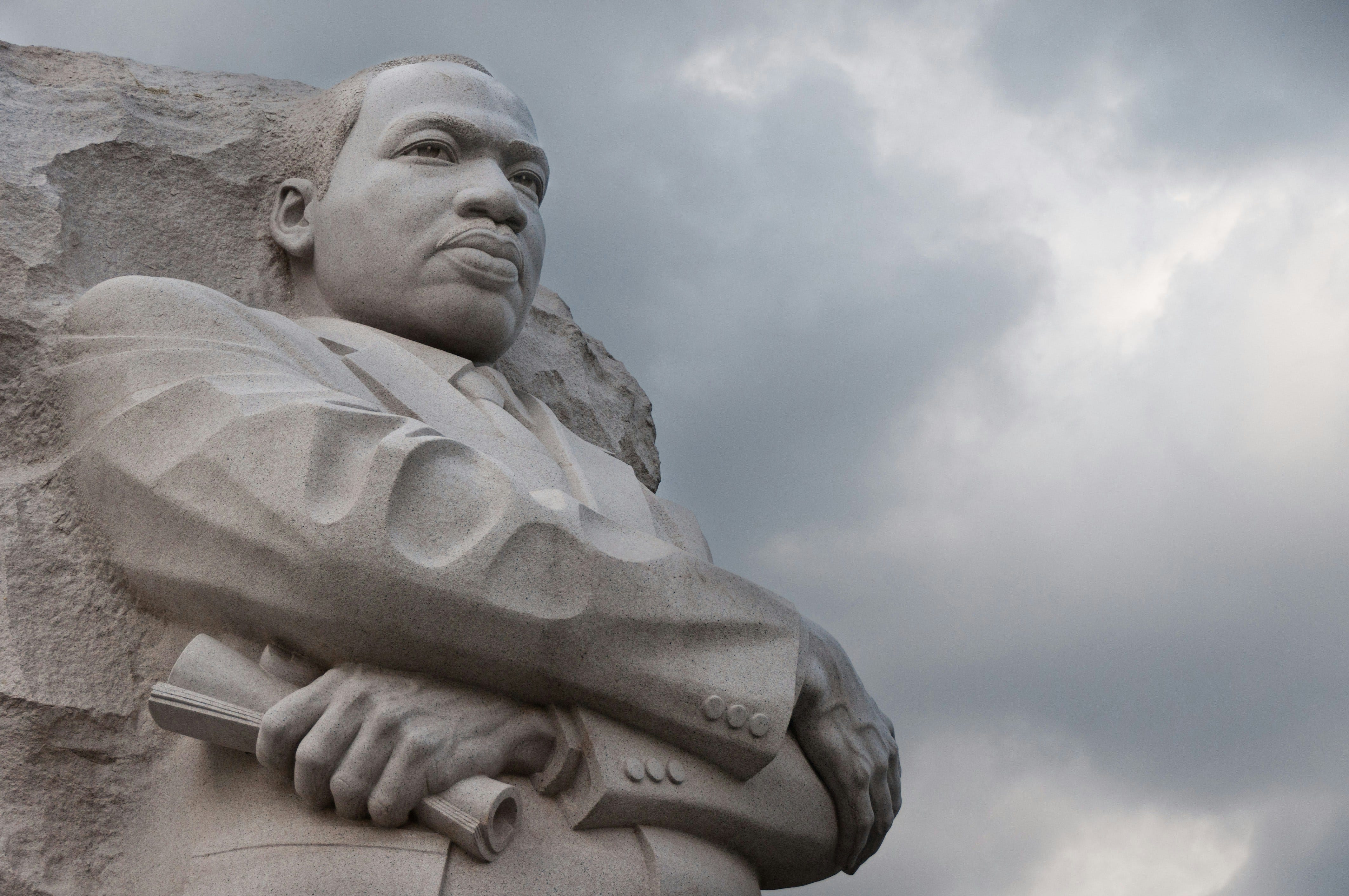
Over the past ten years or so, like with so much else in American society, my vision about Dr. King’s legacy has been blurred. The simple narratives held by the little girl inside of me have been disrupted.
On the one hand, I’m grateful that “MLK Day” is still a federal holiday because if there’s one thing the past year has taught me, its that these symbols are fragile. We got this day in 1983 due to one man’s stroke of the pen, and we could lose it just as easily. I’m doing my best, even in the complexity, to not take today for granted.
On the other hand, I’m agitated by those voices on both the left and the right, to speak in purely binary political terms, who have devoted their public work to dismantling Dr. King’s legacy. These deconstruction efforts have taken on a variety of forms. There are those who believe Dr. King was not progressive enough; there are those who think his personal moral failings undermine the totality of his work. There are those who question his integrity as a person of the Christian faith; there are even those who question the merits of the Civil Rights Movement as a whole.
It’s not these particular critiques or debates that bother me. I appreciate a good mental exercise as much as the next person. I see value in asking big questions and pushing back on ideas. Discourse and debate are meant to be pillars of democratic society. What I find troublesome is this persistent need to deconstruct and dismantle everything, all the time. I can’t help but wonder if and how this thread of social, political, and religious deconstruction is tied to our felt sense that our democracy is on the verge of collapse. We, and by “we” I mean people across the political spectrum, have taken a sledgehammer to all our foundations—culturally, socially, historically, institutionally—and we wonder why the house is caving in.
We’ve forsaken nearly everything that makes for a coherent culture and society, namely a shared story of who we’ve been and who we’re becoming. We move through our days believing that we owe nothing to other people, especially those with whom we disagree. We cut off close relationships due to differences of opinion. We demonize fellow citizens rather than seeking to understand them. We let fear and hatred of the other run roughshod over our communities. And, rather than looking inward or changing our minds or considering that we might approach things differently, we scapegoat and cast blame. All while maintaining an unrelenting, unyielding belief in our own righteousness.
I use “we” very intentionally here. Dr. King’s words come to mind: “We must learn to live together as brothers or perish together as fools.” There is no winning in a country like ours if and when we aim to “destroy the other side.” To sign off on their destruction, whoever “they" are, is to secure to our own destruction.
As I consider the actions of our federal government as of late, I’m deeply concerned. On a personal level, I, like many of us, am worried about my neighbors, family members, and friends. I’m worried about the wellbeing of places I love. I’m worried about our ability as a country to maintain some semblance of a functioning government that doesn’t topple into tyrannical disarray. It’s concerning and in many moments, I feel quite powerless. But even in this, I don’t want to give myself over to the energy of dismantling and deconstructing everything. I want to give myself to the work of renewal, regeneration, creativity, and of restoring broken foundations.
As a person of faith, two points of creative and foundation-building possibility are becoming increasingly clear in my mind. The first is the acknowledgment of spiritual reality, recognizing that the challenges we’re facing require spiritual solutions. The second point of possibility is in the remembrance of the saints.
On spiritual reality
True transformation, at every level of society, is only possible with the regeneration of the heart. We were created by Love, and in love, to live in perfect communion with ourselves, one another, and with God. We were made for communion, not only sacramentally but relationally. This is why so much of the chaos of the world wears on our souls, minds, and bodies. We were not created for death and destruction. Our hearts ache and our souls grieve because we know, on a deeper level than we often name, that we were not made to endure these types of tragedies. We know the world is not as it should be.
What’s tough, however, is that oftentimes, our approaches to addressing the death and destruction we see are functioning on a purely material plane. By “material” I mean, operating as though matter1 is all there is. We think that if we reconfigure our laws, if we vote for the right candidate, if we create the right economic conditions, if we move around the players on the board in just the right way, then we will achieve utopia. Then we will find peace and connection. Then we will return to the garden from which humanity came and communion will be within our reach.
But the communion our souls long for—that intimate and rest-filled connection with ourselves, one another, and the divine—is not a material reality. At least not exclusively. It’s also a spiritual one.
You would think that as a Christian, I would feel much more comfortable writing about spiritual reality, but I hesitated multiple times before typing it out. Somewhere along the line of my spiritual formation, I stopped believing in cosmic forces of good and evil. I reduced my worldview to a flat, wholly secular, materialist perspective—even as I persisted in calling myself a person of faith. I lived like an atheist, or like an agnostic person, at best. “God” was a good and inspiring idea, but he wasn’t a particular or active person in the world. As such, “spiritual reality” became irrelevant.
Writing about spiritual reality also runs the risk of being a bit embarrassing. I’ve been that person, rolling her eyes or casting negative judgments, as others talk about angels and demons, cosmic evil and cosmic good. In modern society, these concepts are foreign and foolery at best and dismissed as toxic and harmful at worst.
But everything has changed for me. I do believe in cosmic good and cosmic evil, and I do believe harmful forces beyond this plane conspire for the destruction of all things good, true, and holy. Just as I believe substantially more powerful forces are working beyond this plane to invite humanity to partner with the Holy in healing our lives and our world from the inside out.
Acknowledging spiritual reality, and taking it seriously, demands a response from us, which is one reason I think we avoid it. With material reality, at least as far as politics are concerned, we assess the world and we make decisions about which side we’re on. We decide how we’re going to engage and what we’re going to sacrifice for what matters to us. For some, we shape our entire personality, values, and worldview around our political and social affiliations. They become our identity and our actions flow from that identity.
A similar process is required when we start to take spiritual reality seriously. If there are cosmic forces of good and evil—God, spirits, angels, and demons—then we have to learn about them and make determinations about which side we’re on. We have to assume that our spiritual and religious choices are not benign, but that they are in fact matters of life and death. Most of all, and I think this is where we modern folks get really stuck, we have to humble ourselves and make peace with the fact that we are not gods. We are small. We are creatures. We do not know everything. We do not understand everything. We cannot trust our every impulse and claim. We have to submit ourselves to something bigger, something higher, and something beyond our intellectual reach.
Acknowledging spiritual reality is a pathway of possibility for us in these times because it enables us to find our place in the cosmic story that’s unfolding. Much like being a student of history gives us perspective, being awake to spiritual reality gives us a more humble orientation to all thats happening the world. I think often of the words of St. Paul to the church at Ephesus,
“For we wrestle not against flesh and blood, but against principalities, against powers, against the rulers of the darkness of this world, against spiritual wickedness in high places.”2
It’s tempting to interpret this line from a purely materialist point of view, determining that St. Paul is merely talking about the rulers of the empire. Fair enough. But to acknowledge spiritual reality invites us to consider that perhaps, we are, in fact, not wrestling against flesh and blood. It invites us to consider that the tools we need are spiritual tools that equip us to adequately wrestle against the principalities, powers, rulers of darkness, and against spiritual wickedness. Perhaps the tools we need are repentance3, humility, and prayer—all tools that the early church cultivated in full even as they faced immense resistance, chaos, fear, and destruction on the material plane. They knew that the material world was only one part of the story, not the whole of it, and they oriented their lives around this reality.
I find tremendous hope, possibility, and agency in the fact that even as horrible, tragic, and concerning losses unfold all around us, we can order our spiritual lives in such a way that we are on the side of cosmic good. It is a costly choice, as we have to set down the tools of modernity, i.e. politics, economics, and activism, and we must pick up the tools that make for true transformation of both society and the soul, i.e. repentance, humility, and prayer. I have only found these tools in adequate measure within the sacramental life of the Church. The only way I’ve found into the sacramental life of the Church is through submission to the person of Christ.
On remembrance of the Saints
“Christ became a person for our sake because we can’t love an abstraction.”
Fr. Turbo Qualls, St. Mary of Egypt Orthodox Church
Kansas City MO
When I first began learning about the canonized Saints of the Orthodox Church—and as I began reading their stories of devotion, asceticism, martyrdom, service, and sacrifice—I felt angry. I felt like I’d been lied to for years. Embodying all the values of the Christian faith had always felt like a lofty and unattainable goal. Even as I grew up up in the church and devoted my young adult life to the faith, I felt like truly following Christ was out of reach and a bit of a fool’s errand. It was too costly, so why bother? At times, it seemed cruel that God would expect such difficult commitments from us without giving us the resources we needed to fulfill those commitments.
Upon encountering the lives of the Saints, however, I realized that God had not been holding out on me. I realized that through his Church, it’s sacramental life, and holy tradition, hundreds and hundreds of legacies of faithful, ordinary believers from around the world had been preserved, along with the practices of remembering their stories through iconography and loving veneration.
This hit home for me in a deeply personal way. My longing to experience a meaningful connection to ancient African religious tradition was fulfilled as I encountered the lives of St. Mary of Egypt, St. Anthony the Great, St. Macarius the Elder, and St. Moses the Ethiopian. My deep need to understand how Christ uniquely meets and empowers women was met when I learned of St. Nina of Georgia, St. Catherine the Great, and of the Theotokos, the God-bearer, also known as Mary, Mother of Our Lord.
In their stories, and countless others, the Church has preserved these blueprints for what it looks like to lead lives of repentance, healing, and surrender to the Cosmic Good who is healing and restoring the world.
This faith is fully incarnational. Flesh and spirit, material and spiritual—they come together and they dance. The incarnation is first fulfilled in Christ and then multiplied in the humble, powerful lives of the saints. And then, by way of the sacramental life of the Church, the possibility of this holistic incarnation is then extended to us. Through repentance and surrender, if God wills it, we too can become saints in our own time.
I’m realizing that every culture, if it is to sustain, has to have saints. We cannot enflesh an abstract set of ideals. We need real humans who we can point to as an embodiment of who we might become. Dr. Martin Luther King, Jr., at least for some time now, has been one such person for American culture. The cultural movement, from across the political spectrum, to dismantle, deconstruct, or to at the very least redefine his legacy, points to a society that no longer knows who it is, what it values, or where its going. Whether this undermining of Dr. King’s legacy is a cause or a symptom of our societal fracturing, I’m not sure. But I do know that it, at the very least, affirms that our coherency and viability as a culture is on tenuous ground.
Only God knows if Dr. Martin Luther King Jr. was a saint in the way I’m talking about sainthood. I don’t know and I’m not trying to make that case. What I am hoping to convey is that as American culture is experiencing an identity crisis, I’m finding hope and possibility in remembering the lives of Saints who defined their material reality in light of the spiritual reality of Christ’s lordship.
One of the Saints whose story has been especially helpful to me as a woman of color living here in the United States is that of St. Olga of Alaska4. She is the first North American, Native American5 woman canonized as an Orthodox saint in the U.S. and hers is story of immense faithfulness, humility, and quiet devotion as she served her community. She was a midwife who journeyed alongside women through labor and loss. She was known to be a safe place for those experiencing trauma, abuse, and harm. She mothered thirteen children. She worked as a seamstress, sewing socks and garments for those in need. She was also a priest’s wife, fulfilling the manifold duties of partnering with him in his ministerial vocation. Since her repose, Orthodox Christians seek her prayers as she’s known to be the healer of the abused and broken.
Mother Olga, pray for us!
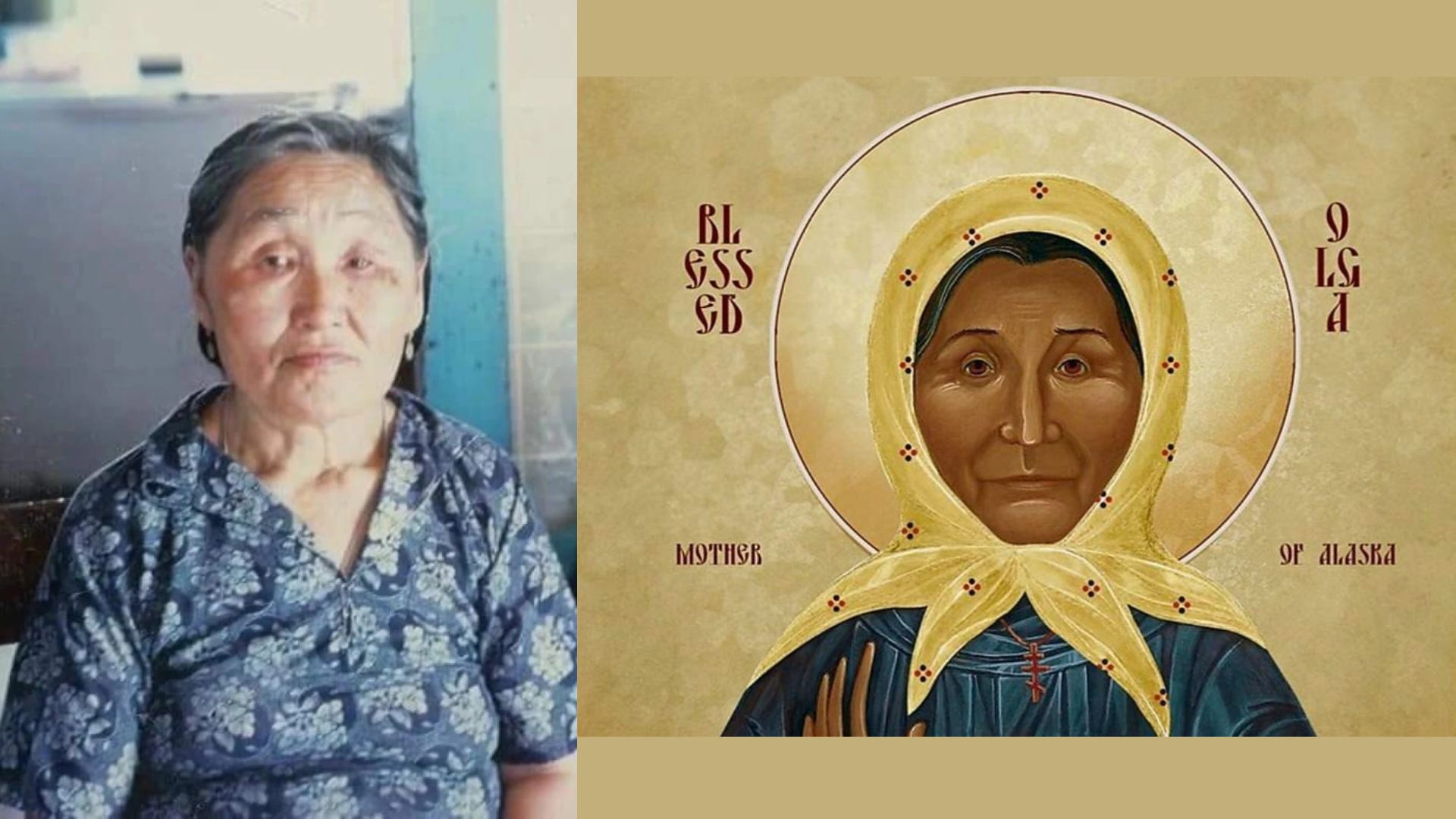
I don’t imagine that one ounce of St. Olga’s life was easy. From all I’ve read, it was immensely difficult. I can’t imagine what her inner terrain must have been like. But I do know that she’s gone down in history as one of the most faithful Christians of modern times, and I know, through the Church, her memory will be eternal.
As the legacies of our American icons and heroes are challenged, redefined, or even erased all together, perhaps we are being invited to anchor our lives into something, and Someone, grander than what our secular, modern society has to offer.

There’s a part of me that feels sad for the little girl inside who is growing up and confronting all the ways the world is much darker than I ever imagined it to be.
It’s like Frodo leaving the Shire6 or Will waking up the in The Upside Down7. But there’s an even greater part of me that feels thankful for the many ways I’ve been invited to pay attention and find my place in the spiritual and material work of being fully human—flesh and spirit—in this time.
May we live wide awake to the cosmic story unfolding all around us and within us.
May we remember the lives of the saints who, in Christ, are showing us the way.
Ephesians 6:12 KJV
My best understanding of repentance is from the Greek metanoia, which speaks of changing one’s mind. I am learning that repentance unto Christ involves not only changing one’s mind, but changing one’s entire life orientation to be one of renouncing disordered thoughts, patterns, beliefs and behaviors and taking up the hard work of obedience and faith. This footnote doesn’t given the word “repentance” its full justice as there’s so much more that could be said here.
She’s also affectionately known as Matushka, or Mother Olga.
She’s of the Yup’ik tribe of South Alaska.
Lord of Rings, of course.
Stranger Things, of course.