
How to live with the seasons
Practical reflections on how to set the cadence of your days

Welcome to 2023! Is it still okay to say that? I know we're just over a week into the new year and I’m sure you've been inundated with offers to vision board, strategize, and set goals for your year.
If you’re anything like me, even the best goal setting and word-choosing exercises have simply not worked out so far. I’ve tried many of them. When I sit down to think or pray or consider what I want for this year, I feel this huge block. It’s like my body is saying, “Go gently, Bethaney. Take it one day at a time.”
Years ago, this would have sounded ridiculous and felt impossible. With goals to achieve and benchmarks to strive for, surely taking life one day at a time was out of the question. Your girl needed plans! Goals, quarterly objectives. I wanted to get shit done and goal setting was my way to make it happen.
This all began to shift, however, when…well, life happened. As I’m sure is the case for many of us, the pandemic was a catalyzing force into immense transformation. Not to mention all of the other normal life stuff, like job changes, health challenges, hard-learned lessons in relationships, and more. With all of these factors swirling and plates spinning, trying to control the outcomes of my life by way of planning became untenable.
How do you plan for a future of uncertainty? Where do you find your footing?
In this, nature has been my teacher.
Learning from Nature
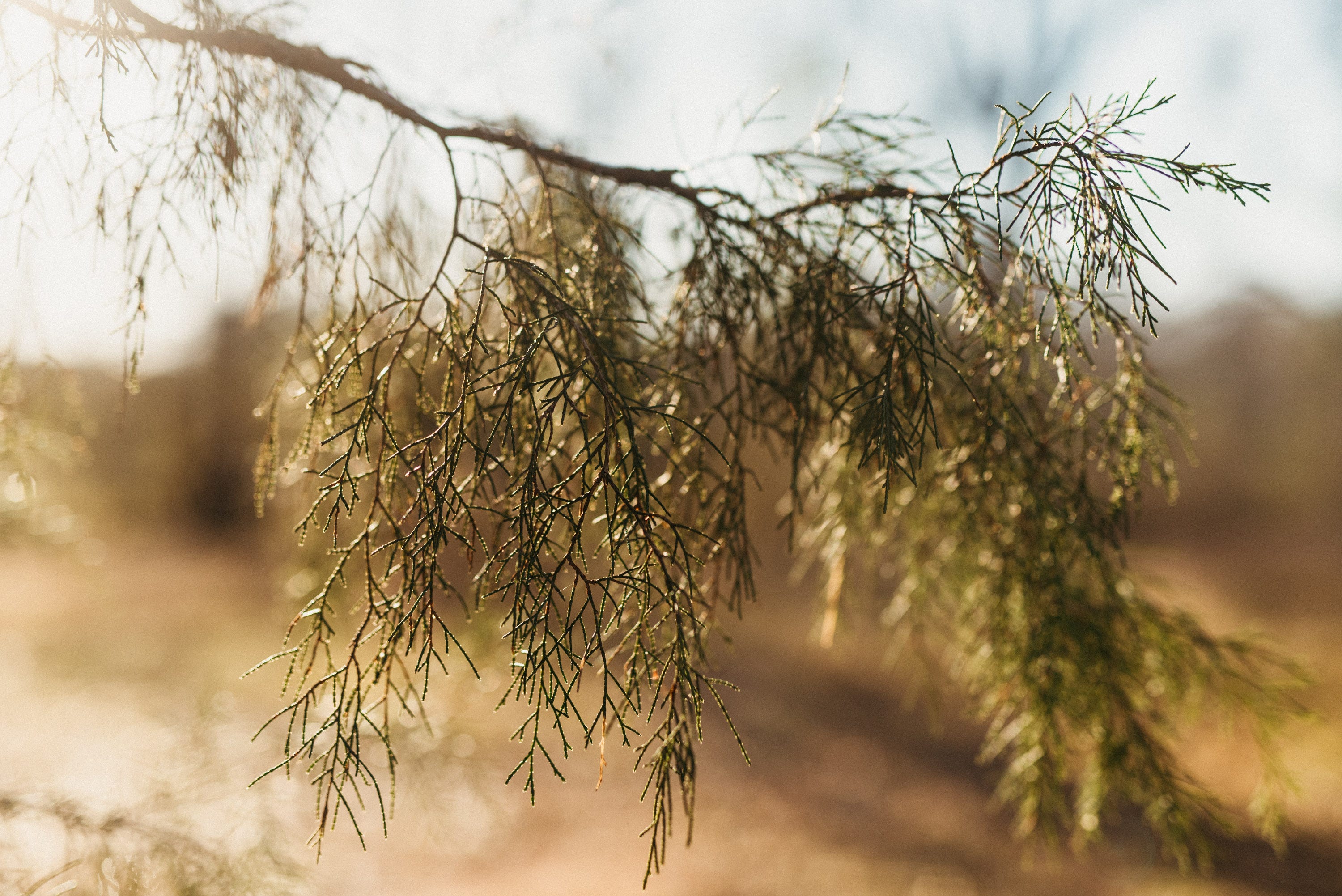
As I’m writing from my office, I can look outside my windows and see multiple trees. There is this gorgeous, expansive magnolia right in front of me. To the right of the magnolia is a sweet gum tree, and to the right of the sweet gum is this massive oak tree. To the left, there are multiple eastern red cedars, a pecan tree, and more sweet gum trees. There’s also a small orchard we’ve started to plant, which features fig trees, pomegranate trees and a couple of elderberry shrubs. We have long term dreams of a food forest and market garden. I’m sure I’ll write about it in months to come, but for now, I want to invite you to look out your window. What do you see? Are there trees stretching into the sky? Are there native shrubs, cacti, or grasses? Maybe there are waterways or rock formations? Maybe you have a garden, a lawn, or a potted plant on your porch.
All around us, nature grows and evolves. All around us, living things bear fruit or reproduce in due time. All around us, life unfolds one day at a time. No goal setting. No planning. No words of the year. The trees, grasses, critters and creatures simply exist in alignment with the truth of who they are. It is the very essence of be-ing.
Of course, an argument can be made that we are not like the trees and the shrubs. We have these “higher faculties” which enable us to forecast, plan, and even manipulate matter, bending it to our will. This is true. Humans are remarkable creatures with great abilities. But I wonder, what is the cost of disconnecting from our ability to touch in with our creatureliness?
I wonder if the prevalence of anxiety, depression, and feelings of isolation, which are plaguing so many of us, is somehow tied to the ways we’ve forgotten what it means to be human, which is richly close to the world humus, meaning “on the ground” and “from the earth.”
What I’m going to propose here is not some quick fix or magic bullet. Those don’t exist. What I propose here is an invitation to experience life less like a marathon to be completed or a battle to be won. Less like a list of goals to accomplish.
What if, to quote the psalmist1, you experienced life like a tree planted by streams of water? What if?
What is seasonal living?
Living seasonally is an opportunity to join in with the more-than-human world, letting the rhythms and cycles of your physical place shape how you exist, how you work, how you parent, and how you lead. It is a fundamental reorientation. I will not pretend like it is easy or normal in our culture. It is not. Our culture thrives on linear progress. Nature is not linear; it is cyclical. To live this way is a countercultural way.
What is striking to me now is how ancient Christian scriptures speak to this. Many years ago, in the midst of an intense struggle with anxiety and depression, I found myself returning again and again to Jesus’ words, “Look at the wildflowers. They don’t worry or stress and see how beautifully they are clothed. Look at the sparrows, they do not labor or strive, and yet they are fed.”2 I poured over these words because I was so worried that if I didn’t plan just right, or network perfectly, or organize my life in the “best way” then I would fail and I wouldn’t have what I needed. I was terrified. I didn’t understand how doing “nothing” like the wildflowers or sparrows would meet my needs for clothes, food, shelter. But I recited the words over and over again because something in them rang true. The wildflowers and sparrows don’t strive. The magnolias and sweet gums outside my window aren’t worried about a thing. They simply live and grow.
What I’ve learned in my experimentation with seasonal living is that being nurtured by creation and Divine care is not about doing nothing. It is about being planted in places that sustain you, and partnering with the seasons of your place to set the cadence of your days.
Seasonal living is about being planted in places that sustain you, and partnering with the seasons of your place to set the cadence of your days.
What does this mean practically?
First, it means being a student of your place. You have to study where you live. What are your seasons? Do you have four? Two? One? What are the migration patterns of the birds in your region? What types of trees grow where you live, and how do they change throughout the year, if at all. In studying your place, you not only learn more about your environment, but you are primed to begin asking deeper questions.
Which leads to practice number two: pay attention to how you are experiencing the seasons of your place. If you have all four seasons (winter, spring, summer, and fall) the cadence of your days might shift every three months or so. If you live in a place with perpetual summer or perpetual winter, be curious about how the lack of seasonality is shaping you. Also note any aspects of your life that feel incongruous with the seasons. Maybe your kids’ school schedule feels at odds with what the cycles of nature in your location. Maybe there are big deadlines or events at work that feel misaligned with what your body is longing for during parts of the year.
Studying your place and paying attention to how you are experiencing your seasons can take a few years. This isn’t a quick exercise. It is a gentle practice of noticing. It unfolds over time. I sat with these types of questions for at least three years before I had the opportunity to actually change anything about my life. So don’t rush it.
If seasonal living is new to you, then let this moment be the one when you simply start to pay attention. The hope is that over time, you’re able to begin making changes from a place of rootedness and embodied, place-based awareness. Instead of striving for arbitrary goals, you’re able to listen to both your life and the land you’re living on for what is most meaningful and feasible in any given season. You begin finding ways to align your work, your family rhythms, your service to the world, and even the needs of your body with the place you live. Seasonal living is not perfect and it doesn’t make life’s struggles disappear, but in my experience, this practice can foster an alignment that is more spacious, more gentle, and less bent on striving to perfect our lives.
There is so much more to be shared on this topic. I love inviting people into exploring what seasonal living could look like for them. In this week’s Breadcrumbs (releasing this Thursday at 10 AM), I’ll be sharing more about my seasonal living practice, inclusive of what it means for my work, my body, and any other details that come to mind. If you want a sense of how this plays out real life, make sure you are subscribed to Breadcrumbs either here on Substack or on Apple Podcasts.
Lastly, I’ve been toying with the idea of offering an online workshop or learning immersive about this exact topic. Seasonal living is cyclical which means you can opt into it at any point of the year, not just in January. But before I create this offering, I’d like to get a sense of how much interest there is, so cast your vote in the poll below.
Love you all dearly and so grateful you’re here. If you have any questions, reflections, or personal experiences with seasonal living, I’d love to hear from you via email or in the comments below.
Be well, and catch you here next week!
Bethaney
Psalm 1 from the book of Psalms
Luke 12:22-27, adapted and interpreted by me.