
When goldenrod comes
Coming alive with the world


Goldenrod is here.
She’s been here all along, growing quietly and steadily along the edges of roads and in forgotten fields. Most of the time, she’s easy to miss as her green blends in with all sorts of other wild and growing things. But slowly, and then all at once, she blankets my world with her yellow warmth and light. She’s everywhere.
I noticed her for the first time when Alex and I moved to Middle Georgia a few years ago. While driving along a country road one day, I asked him, “What is that gorgeous plant?” He responded, “Oh, it’s goldenrod. It’s medicinal, you know?”
He was right. Not only is goldenrod medicinal as a practical, herbal remedy. But her presence is medicine. Noticing her blossoms each year reminds me, body and soul, that it’s time to celebrate the former season’s growth and it’s time to prepare my spirit for the liminality, thinness and coming release of Fall.
If you can’t tell, I’ve come to adore this wild, prolific, gold-struck delight. To call goldenrod a “plant” doesn’t quite capture how I feel about her. I prefer instead to call her my relative, borrowing from the language of a few Indigenous writers I know. Relative or kin feel much more honest. They capture the affection I feel for her stalky green stem, her flat and reaching green leaves, and of course, her bursts of golden, flowery light. Nothing catches the sun quite like goldenrod on a cool fall morning—or evening, when the hour also turns golden, painting the world in an earthy magic.
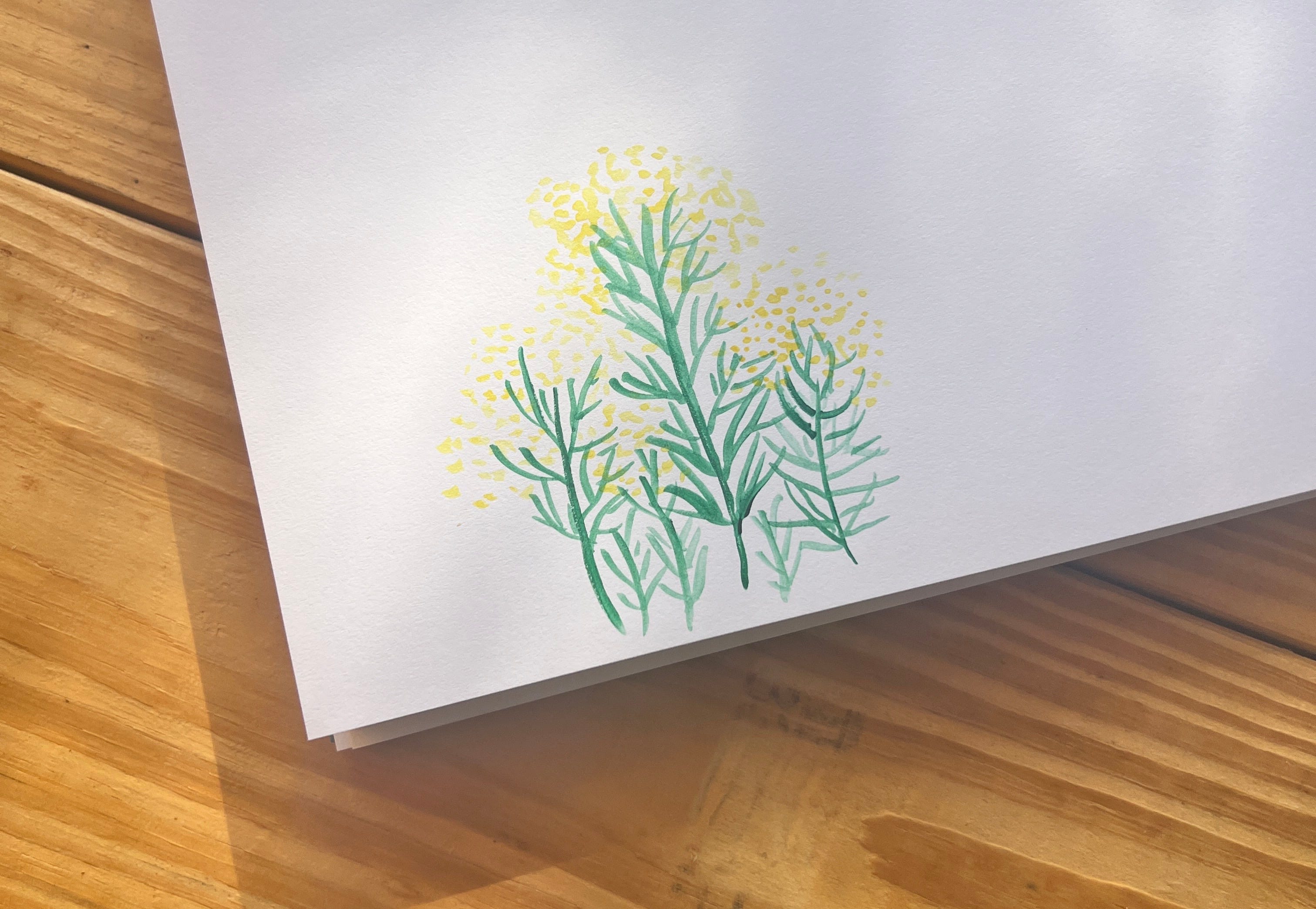
Goldenrod is teaching me about what it means to go first. She doesn’t wait for the oaks and sweetgums to shed their leaves. While most of the trees and foliage around us are still green, goldenrod raises her brightly-hued hands to say, “I’ll go. I’ll show them who we are.” She shines.
Goldenrod is teaching me about growing deep and lasting roots on the margins of life. She thrives on the edges of roads, of fences, of highways. She’s okay with not being in the center. She’s okay with not being the main attraction. She knows that her abundance lies in her ability to make a home anywhere and to spread her seeds with the wind. She doesn’t need anyone to choose her. She’s chosen herself. She blossoms and expands in the very places we call unimportant, marginalized and forgotten.
Goldenrod is also teaching me about the resilience of wildness. There are some herbs and flowers that through years of cultivation and domestication can be easily seeded and transplanted into a garden. Basil fits in this category. Maybe even rosemary and thyme. There are many others. But there are some herbs and flowers that just don’t want to be tamed. You can find them in the wild or along a roadside, but the moment you try to put them in your garden and attempt to tell them who you want them to be for you, they die. They refuse to cooperate. Their seeds won’t sprout; their roots won’t take hold. It’s amazing, honestly. When left to their wild and chosen places, they thrive. We can partner with them through ethical and relational foraging, but we cannot control them. Goldenrod, in my experience, fits in this category. She is untamed, and in her wildness, she’s unstoppable.
Goldenrod is teaching me about the depth and richness of paying attention. Not only paying attention to the boldness of her life, but about the significance of paying attention to how noticing her is shaping me.
We move so fast. We move so. damn. fast. And we miss so much.
But there she is: goldenrod. And there they are: all of Creation—living, growing, changing, shedding, dying, teaching us what it means to be alive.
Are we listening?
Are you?
It’s beautiful unless you’re allergic to it
Beautiful acknowledgement and noticing of the lovely goldenrod!